United Kingdom
June 26, 2026
Following eight years of intense negotiation and compromise, on 17 June 2026, the European Parliament gave its final legislative approval to deregulate crops developed using New Genomic Techniques (NGTs), including CRISPR-Cas9 and other gene editing methods. Passing with 431 votes in favour, 201 against, and 29 abstentions, this landmark vote clears the final hurdle for the law, which breaks away from the EU's 20-year-old restrictive GMO rules.
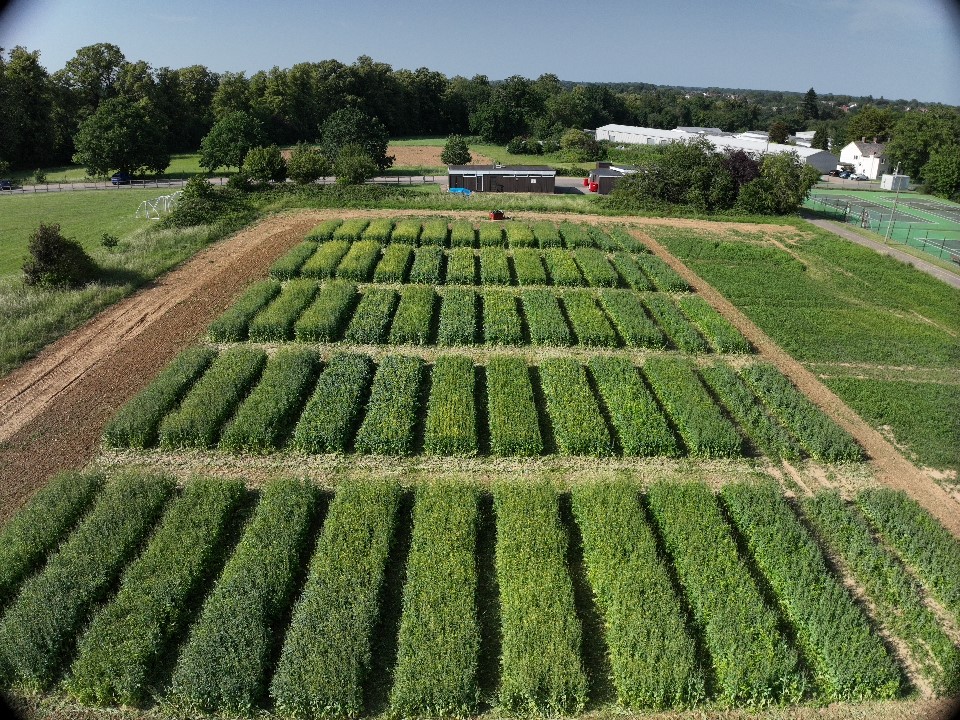
Gene edited (PBO) oilseed rape field trial at Rothamsted Research, June 2026. Photo by Klaudia Sokolowska.
Rothamsted Research very much welcomes this new legal position and also the regulatory clarity it provides. This is a clear signal of the EU being pro-innovation and looking to new technologies to deliver food security and climate-resilience. The new law will soon be signed off, triggering a two-year implementation period, during which the European Commission will draft secondary technical rules, making the deregulation fully applicable on the ground by mid-2028.
Importantly, the legislation shifts the EU's focus toward regulating what a plant looks like genetically rather than how it was modified, establishing two distinct categories:
NGT-1: Plants with minor genetic edits that could have occurred naturally or through traditional breeding. Once verified, these crops are exempt from stricter GMO regulations. They will follow a streamlined approval process, require no risk assessments, other than those applied to all new crop varieties, and face no consumer-end product labelling. This will enable creators and developers to bring a new product quickly to market without costly regulatory burdens
NGT-2: Plants with more complex genetic edits, including those engineered for herbicide tolerance or targeted to produce insecticidal substances. These varieties will remain subject to the strict risk assessments and commercial authorizations of the existing EU GMO framework. It remains to be seen if NGT-2 will be considered ‘GMO-lite’ or require the full regulatory process associated with regular GM. It is to be hoped that this is not the case, as it has strongly impeded innovation in the EU plant biotechnology sector over the last 20 years.
Alignment with the UK and the Genetic Technology (Precision Breeding) Act 2023
Although the products of quite different legislative processes, it is notable (and encouraging) that the EU’s new NBT regulations are very similar in scope to those of the UK’s Genetic Technology (Precision Breeding) Act 2023 – both regulatory systems have two tiers of classification (for the genetic editing), with the lower tier (NBT1, PBO) not being subject to GMO approval or labelling. Importantly, both approaches focus on the genetic edit rather than the process by which it was created – this is a fundamental shift in approach and one that developers such as Rothamsted Research welcome and endorse. Rothamsted has been at the leading edge of using gene editing to deliver more resilient and nutritious crops, having carried out the first field trial of a GE crop in 2018 and more recently becoming the first developer to be granted marketing approval under the Precision Breeding (2023) Act. One benefit of the parallel nature of the UK and EU regulatory pathways for gene edited crops is that such alignment should enable frictionless movement of products between the two markets – this is obviously highly desirable.
Professor Johnathan Napier, Discovery Leader at Rothamsted commented “This is a seismic shift in how gene edited crops are regulated in Europe and reflects the pragmatic realisation that such technologies are essential for delivering resilient crops. Ultimately it is the recognition that we need to embrace the future that has driven this important change from the EU. In addition, the potential for regulatory alignment between EU and UK can further stimulate innovation and the bioeconomy.”
Professor Pete Eastmond, who recently obtaining marketing approval for his high lipid PBO barley, commented “It’s truly exciting to see the EU embracing new genomic technologies, such as gene editing, to help address the mounting challenges that face agriculture and food production. The new regulations will finally free scientists across Europe to use the best tools for the job in hand.”
Professor Nigel Halford, PI on Defra’s Farming Innovation Programme PROBITY project commented “This is a historic moment, with the EU moving for the first time to allow innovation in plant breeding to benefit plant breeders, farmers and consumers. We must build on the momentum generated by the approval of this legislation and ensure that the powerful technology of gene editing is available to our breeders to use.”


 Topics
 Species