October 19, 2022
 Participants during the Pearl Millet Scientists Field Day.
With the growing global need for climate-resilient crops, scientists attended an ICRISAT pearl millet field day to select enhanced pearl millet bred by the globally leading drylands Institute.
A total of 81 scientists and breeders (30 from 21 public organizations and 51 from 26 private organizations) visited ICRISAT’s fields – rich in crop diversity - to select material for hybrid pearl millet development.
Pearl millet traits being increasingly sought include improved taste, longer flour shelf life, greater drought, and disease tolerance and forage varieties with higher protein and digestibility qualities.
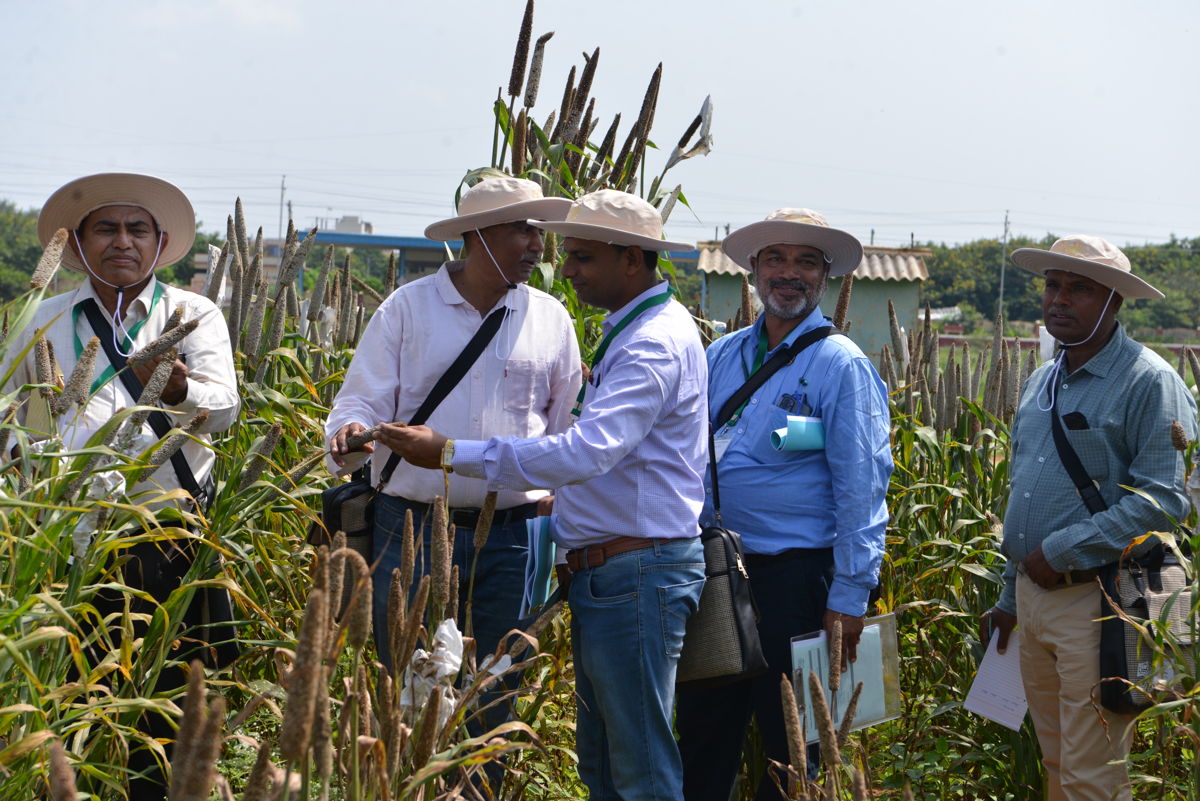 Scientists select breeding material from 17,000 plots made available at ICRISAT.
Global participants
The groups which included participants from Japan, Brazil, Mali and India were welcomed by Dr SK Gupta, Principal Scientist of Pearl Millet breeding research at ICRISAT.
During the two-day biennial event held from the 3rd to the 4th of October, more than 17,000 breeding plots were made available for the breeders to select desirable traits and adaptations.
ICRISAT-bred parental lines as well as progenies at various stages of development were on display for the participants. Samples from 11,000 pearl millet breeding plots were selected of which 2,000 represented unique breeding plots that were selected by the participants.
In speaking to participants, Dr Sean Mayes, Global Research Program Director, Accelerated Crop Improvement Program also spoke of the challenges climate change poses to the agricultural sector and how ICRISAT was responding.
“ICRISAT has initiated multiple efforts such as forward breeding and shuttle breeding to enhance drought tolerance in its breeding lines. Some of the materials developed using these methods have been planted in the fields for selection to enhance genetic diversity in drought-prone environments,” said Dr Mayes.
Heat and drought tolerance materials were made available to the breeders, developed through shuttle breeding, cytoplasm-specific maintainers and restorers, good combiners, and different panicle shapes with varying lengths and thicknesses and lines derived using promising African material.
Participants made extensive selections of potential hybrid parents and breeding lines and commended the Institute on the genetic diversity on display and the meticulous way in which material had been organized.
As part of the visit, participants also visited the Blast and Downy Mildew (DM) nurseries to learn about screening protocols and to select disease-tolerant donor parents. They were briefed about the recently collected pearl millet germplasm from Eastern African countries by ICRISAT’s genebank scientists.
Participants were also able to view different types of other millet genetic resources held by the genebank ahead of the International Year of Millets 2023 and were subsequently briefed by Dr Kuldeep Singh, Cluster Head – Genebank.
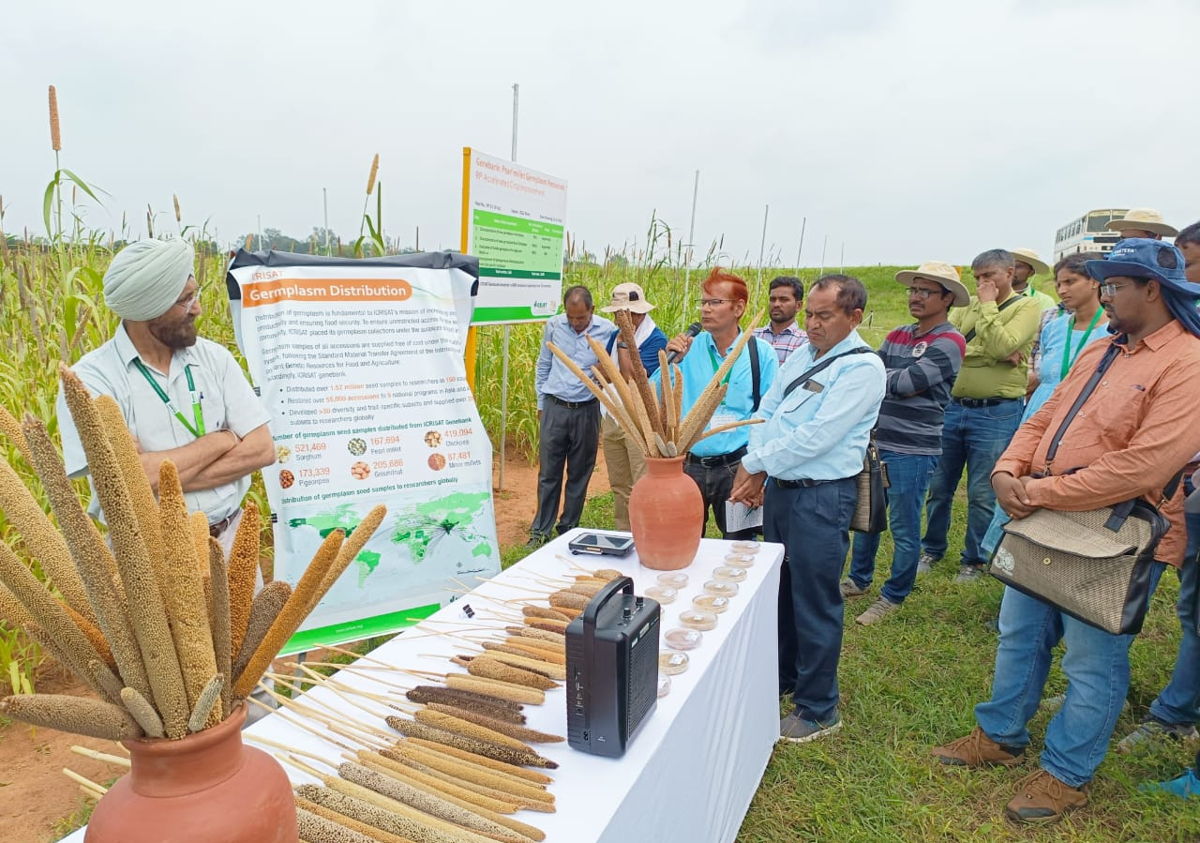
Dr Kuldeep Singh, Cluster Head, ICRISAT Genebank brief visiting scientists on pearl millet genetic resources available at ICRISAT.
Dr CV Ratnavathi, Director IIMR (Indian Institute of Millets Research), Hyderabad and Dr Tara Satyavathi, Project Coordinator, AICPMIP (All India Coordinated Pearl Millet Improvement Project), Mandor commended ICRISAT for its contribution toward enhancing the productivity of pearl millet in India through its breeding efforts.
Dr Bijendra Pal and Dr RS Mahala from the seed industry hailed ICRISAT for providing improved germplasm to private sector partners that were effectively enhancing genetic diversity and genetic gains in the crop.
Monographs released
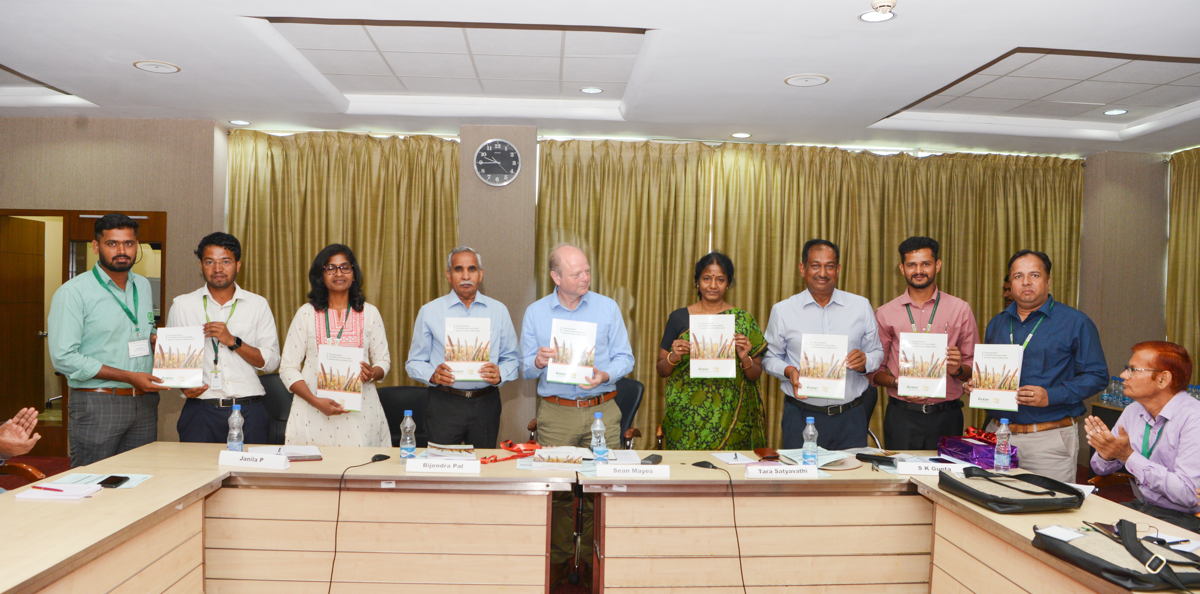
Scientists unveiling the monograph during the launch of Pearl Millet scientists' field day visit at ICRISAT.
Two monographs were released during the scientist field day visits, one on the characterization of 104 designated seed parental lines bred at ICRISAT from 2005 to 2018, and the other on the characterization of 144 selected restorer parents designated between 2006 to 2019.
Hybrid Development for Africa
ICRISAT’s pearl millet research will also focus on hybrid development to better suit the geographies of select regional areas of Africa. To support this endeavour, Riyazuddin Mohammad, a pearl millet breeder from West and Central Africa participated in the event, to help replicate the Hybrid Parents Research Consortium (HPRC) for adoption in Africa.


 Topics
 Species