Ibadan, Nigeria
17 February 2023
Maize is a staple cereal across Africa that is also consumed globally. Rich in protein, the crop that is a significant source of dietary fiber in human nutrition is also one of the primary ingredients in animal feed production because of its high-energy content and digestibility.
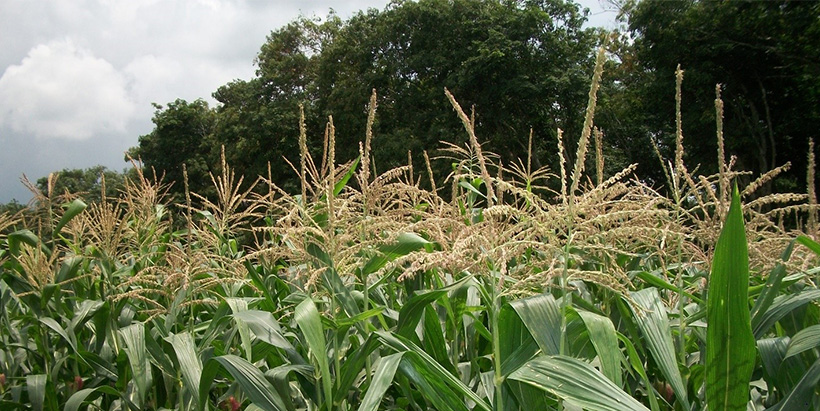 Maize hybrids cultivated in one of the five agroecological zones across Nigeria
However, for many years, farmers in rural Africa have lacked access to improved farming technologies, clean and pest-resistant seeds, and proper agronomic practices that will help reform the economic value of maize. Cultivated by rural farmers, maize has been identified as one of the crops that can combat global food shortages.
Various agroecological patterns affect maize production, including cultivation, quality, and nutritional components. The nutritional characteristics, including carbohydrates and minerals (e.g., potassium and magnesium) and fiber, make the crop a significant food source for millions worldwide.
Five IITA–CGIAR researchers, including Food Science and Technology Scientist Oladeji Alamu, carried out a study that focused on providing breeders with more information on the effect of factors such as genotype, location, and planting season, on the nutritional composition of twenty-five maize hybrids. These maize hybrids were cultivated in two seasons at five agroecological zones across Nigeria.
The study revealed that among the investigated factors, planting environment and season significantly affect fourteen maize hybrids’ proximate composition and Metabolizable Energy (ME). According to the study, the ME is the remaining energy after fecal and urinary energy loss; hence, it is available for growth or reproduction for supporting metabolic processes such as locomotion and respiration. In contrast, moisture content and ME were not particular to the differences in the environmental conditions.
In addition, the study established that the planting environment affected maize quality traits such as carbohydrate, protein, and ash content more than the genotype, resulting from the two planting seasons.
As part of validating results from the study, Alamu found that maize hybrids – LY1501, LY100-18, and LY1501 are rich in protein, ME, and total carbohydrates.
The study has recommended these maize hybrids for breeders as part of the components used to produce consumer-preferred maize-based food products for household and industrial purposes. This will contribute to the agricultural economy’s growth while improving rural farmers’ livelihoods through access to improved seeds and increased production.


 Topics
 Species