European Union
December 17, 2024
Part 1

CPVO 'Plant Breeding Success Stories' continue with another example of a promising enterprise that breaks ground with the first gene-edited vines for wine making in Europe. EdiVite is an Italian spin-off that can be described as a pioneer in production of innovative prototypes for a sustainable viniculture. Today we talk to Mr. Mario Pezzotti who is a full professor in plant genetics at the University of Verona and scientific advisor for EdiVite. In the first part of the interview, we will focus on the creation of EdiVite as a spin-off, the team behind it and the idea of developing genomic-edited vines.
CPVO: Could you share more about the founding process of EdiVite as a spin-off? What motivated the establishment of this venture?
EdiVite: EdiVite is a university spin-off originating from the Agricultural Genetics laboratory of Mario Pezzotti and Sara Zenoni, in collaboration with viticulturists Marianna Fasoli and Giovanni Battista Tornielli, and plant pathologist Annalisa Polverari. The initiative was driven by a diverse group of entrepreneurs, including farmers, nursery owners, and agri-risk insurance professionals. The primary motivation was to address the need for genetic innovation in viticulture, using genome editing to enhance disease resistance in elite grapevine varieties.
CPVO: How many people currently work at EdiVite, and what are the main professional profiles and roles within the team?
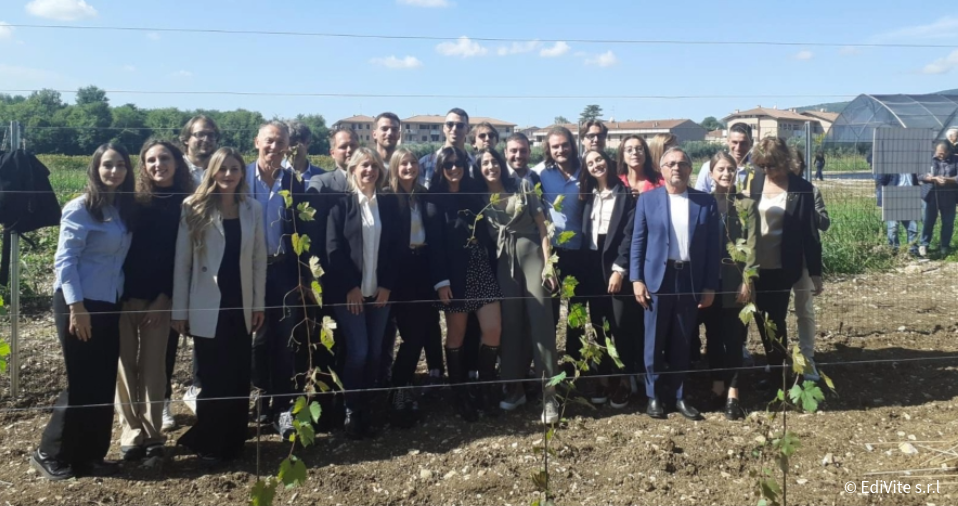
EdiVite: We currently have two full-time employees, one PhD student, and five internship students. The team primarily consists of plant biotechnologists and viticulturists, with ongoing supervision provided by the academic founders of the spin-off.
CPVO: What expertise was considered essential when building the team, especially given the technical and regulatory challenges in genomic editing?
EdiVite: In this initial phase, EdiVite focuses on producing plant prototypes, so the team was assembled with expertise in plant tissue culture, genetics, genomics, bioinformatics, plant pathology, and viticulture. These skills were deemed critical to achieving the project's technical objectives.
CPVO: How does EdiVite plan to grow its team in the future to support new projects and collaborations?
EdiVite: We plan to expand our team by recruiting experts in management, finance, and human resources to support the transition from a spin-off to a small enterprise. This growth will enable the company to attract financial investments and facilitate the commercialization of genetically edited grapevines resistant to downy and powdery mildews.
CPVO: What were the main technical and regulatory challenges encountered during the development and implementation of genetically edited vines?
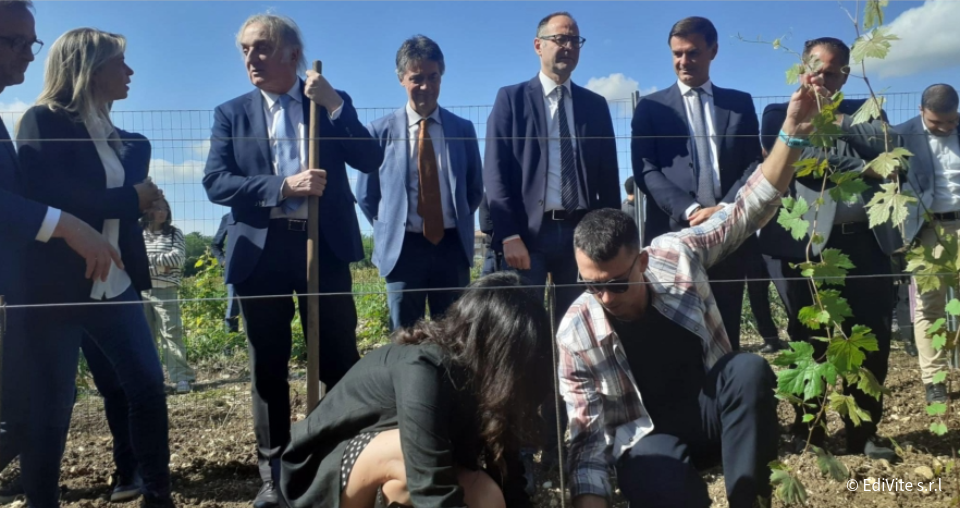
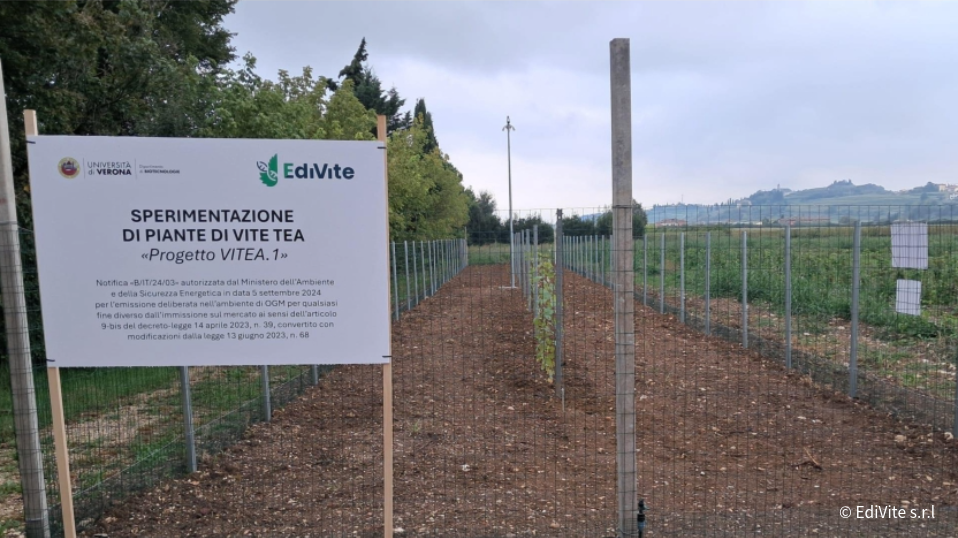
EdiVite: From a technical perspective, assembling the expertise required to regenerate plants from single protoplasts and optimizing conditions for DNA-free editing via protoplast transfection was particularly challenging. On the regulatory side, the team benefited from the updated Italian legislation (July 22, 2023), which eased restrictions and allowed scientists to request authorization for experimental trials. However, aligning their work with the requirements of the 2001/18 European Directive posed initial difficulties in understanding and meeting all regulatory criteria.
CPVO: What are the prospects for applying NGTs (New Genomic Techniques) to other vine varieties, and what is the expected timeline for these developments?
EdiVite: Tissue culture conditions and protoplast regeneration have already been optimized for around a dozen national and international grapevine varieties. The necessary pipeline is in place; the next steps involve conducting additional experiments, establishing more experimental fields, and registering the clones once European regulations permit. We are optimistic about progress and hope for a supportive regulatory environment to accelerate these developments.
CPVO: How do you assess the acceptance among winemakers and consumers regarding the use of vines obtained through genomic editing?
EdiVite: We actively engage in outreach with farmers, enologists, policymakers, and wine organizations, and we’ve observed positive responses within the wine industry. There is strong interest in environmental and economic sustainability, which aligns with these advancements. Consumers are increasingly aware of the wine sector’s efforts to adapt to climate change and enhance sustainability, which can foster broader acceptance.
CPVO: Which collaborations with research institutions or wine industry companies have been crucial to the success of the project?
EdiVite: We have established collaborations with various global partners, including universities, research institutions such as INRAE, CREA, and industry leaders like Gallo. These partnerships have been instrumental in advancing our research and innovation.
CPVO: How does EdiVite address the challenges related to intellectual property protection for grapevine varieties obtained through NGTs?
EdiVite: This remains a complex issue, particularly given the current uncertainty in European regulations. The framework for intellectual property protection is still under discussion and requires greater clarity.
December 20, 2024
Part 2

CPVO 'Plant Breeding Success Stories' continue with another example of a promising enterprise that breaks ground with the first gene-edited vines for wine making in Europe. EdiVite is an Italian spin-off that can be described as a pioneer in production of innovative prototypes for a sustainable viniculture. In the second part of our interview with Mr. Mario Pezzotti - a full professor in plant genetics at the University of Verona and scientific advisor for EdiVite, we will focus on the European viniculture, the future of genomic-edited vines and the challenges in the sector. The first part of our interview can be found here.
CPVO: What are the environmental implications and potential sustainability benefits of using disease-resistant vines?
EdiVite: Genetically edited vines can significantly enhance vineyard sustainability by drastically reducing pesticide use. This makes viticulture more feasible even in areas where vineyards are integral to local environments and communities, contributing to both ecological and social benefits.
CPVO: How does Italy position itself within the European context concerning the adoption and regulation of NGTs in viticulture?
EdiVite: Thanks to years of advocacy and communication by scientists and stakeholders, Italy now has strong support within its parliament for the introduction of NGTs in agriculture, particularly in viticulture. This positions the country as a leading proponent of these technologies in Europe.
CPVO: What are the next steps for EdiVite after the field trials of edited Chardonnay vines?
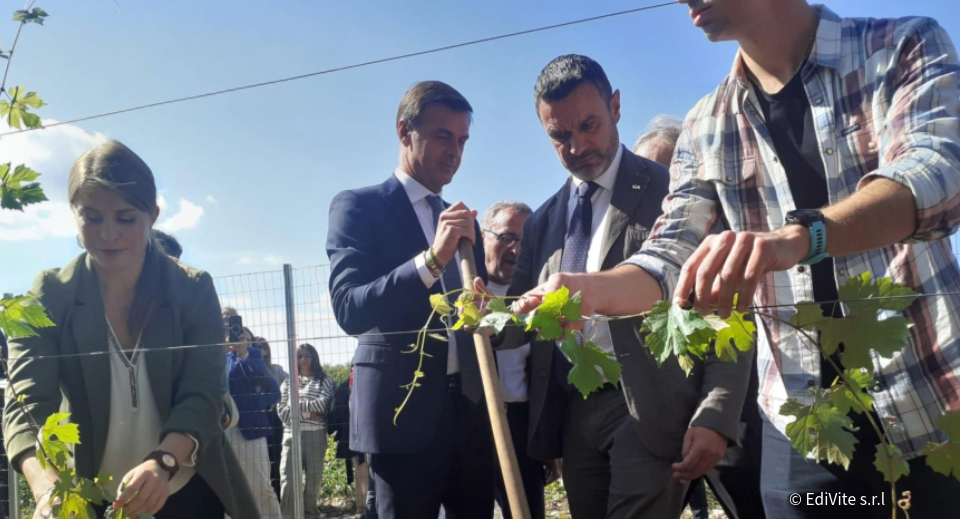
EdiVite: The next steps largely depend on decisions made in Brussels regarding the cultivation and commercialization of these vines. We are optimistic about a favorable regulatory outcome and look forward to integrating this transformative innovation into viticulture.
CPVO: How does EdiVite contribute to the education and awareness of the public and industry professionals on the potential of genomic editing in agriculture?
EdiVite: We conduct frequent outreach activities, participating in events and exhibitions to engage the public, and educating industry professionals with clear, scientifically accurate explanations. By simplifying complex scientific concepts, we aim to build awareness and understanding of genomic editing’s potential.
CPVO: What is the long-term vision for EdiVite in advancing viticulture through genomic editing?
EdiVite: Our long-term vision is to become a leader in sustainable viticulture by providing innovative, genetically edited grapevine varieties that meet the challenges of climate change, disease resistance, and environmental sustainability. We aim to develop a portfolio of disease-resistant grapevines and expand collaborations globally, ensuring these innovations reach winemakers and contribute to a more sustainable future for the wine industry.
CPVO: How do you foresee the role of EdiVite in shaping policies and regulations around genomic editing in agriculture?
EdiVite: As pioneers in this field, we see EdiVite playing an active role in shaping the discourse around genomic editing policies. By engaging with policymakers, scientists, and industry stakeholders, we aim to promote scientifically informed regulations that balance innovation with safety and public acceptance. Our outreach efforts are also critical to demonstrating the societal and environmental benefits of these technologies.

CPVO: What message would you like to convey to the broader agricultural and wine communities about embracing genomic innovation?
EdiVite: We want to emphasize that genomic innovation is not just about advancing technology but about creating solutions to urgent challenges, such as reducing environmental impact and ensuring the sustainability of agricultural systems. For the wine community, adopting these innovations means preserving the rich heritage of viticulture while adapting to the realities of a changing world. Collaboration, openness to new ideas, and a shared commitment to sustainability are key to achieving these goals.


 Topics
 Species