Kabwe, Zambia
March 19, 2025
- Seed output from Zambia will supply 6.4 million Sub-Saharan African smallholders with high-yielding maize seeds in 2025, and up to 10 million by 2030
- The facility supports Bayer’s growth strategy to double the Crop Science Division’s business in Africa by 2030
- Investment supports the local economy through jobs and community initiatives
 With its Itaba maize seed facility in Zambia, Bayer supports food security in Sub-Saharan Africa.
Bayer today announced the opening of a new maize seed facility in Kabwe, Zambia. Through the 32-million-euro facility alongside further investments in organization and the grower network, Bayer triples its existing capacity for high-quality maize seed production in the country in 2025. This capacity ultimately converts into annual maize consumption of approximately 30 million people in the region. The seed output is expected to further increase in the coming years. The high-yielding seeds will reach 6.4 million smallholder farmers in Zambia and other countries in Sub-Saharan Africa this year and up to 10 million by 2030. To date, the investment is the second largest private investment by a German company in Zambia.
“Millions of people around the world, particularly in Sub-Saharan Africa, suffer from severe food insecurity. Ending hunger is central to our mission at Bayer. With our new seed facility in Zambia, we want to make a meaningful contribution to that crucial goal,” said Chief Executive Officer Bill Anderson, who inaugurated the site alongside his excellency Hakainde Hichilema, President of Zambia.
Facility to Benefit Smallholder Farmers Who Are Essential to Food Security
Despite its vast arable land and significant agricultural potential, particularly in Sub-Saharan Africa, one in five people on the continent face food and nutrition insecurity. Key reasons for this include limited agronomic knowledge and access to modern technology. With its new site, Bayer is helping to address these challenges by increasing both the quantity and especially the quality of available certified seeds, offering higher yields and enhanced resilience to climate and disease. Alongside stewardship and agronomic training, these conventional hybrid maize seeds empower farmers in Zambia and neighboring countries to produce more food more efficiently, thereby increasing their productivity and contributing to food security.
This particularly accounts for smallholder farmers, who on average cultivate crops on less than 10 hectares and produce up to 70 percent of the food consumed on the continent. “Enhanced productivity not only increases food security, but it makes a tremendous difference for the livelihoods of smallholder farmers, their families, and even their communities,” said Debra Mallowah, Head for Bayer’s Crop Science Division in Africa. By addressing up to 10 million smallholder farmers, the investment significantly helps to advance Bayer’s goal of reaching 21.5 million smallholders in Africa and 100 million globally by 2030.
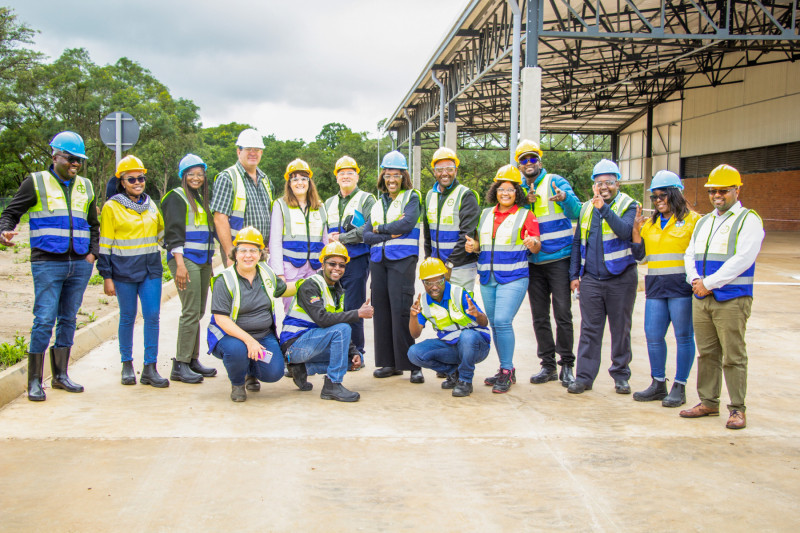
Team of Itaba maize seed facility - Credit: Bayer AG
Investment Is an Important Pillar for Bayer’s Growth Strategy in Africa
While addressing food security challenges in the region and supporting smallholder farmers, the investment also represents a significant business opportunity for Bayer. Africa is one of the fastest-growing markets with substantial agricultural potential. The demand for Bayer’s Dekalb brand hybrids has shown considerable growth over the years, surpassing supply. As such, the site is a key component of Bayer’s growth strategy for Africa, with the aspiration of doubling the Crop Science Division’s business on the continent by 2030.
To this end, another 35 million euros until 2028 are earmarked for further expansion of the seed production network across Sub-Saharan Africa. Bayer’s expertise in maize seed breeding and production holds particular potential because it is a staple food crop in Africa; for instance, in Zambia, a maize meal known as “nshima,” constitutes a significant part of the daily diet, providing 60 per cent of caloric needs.
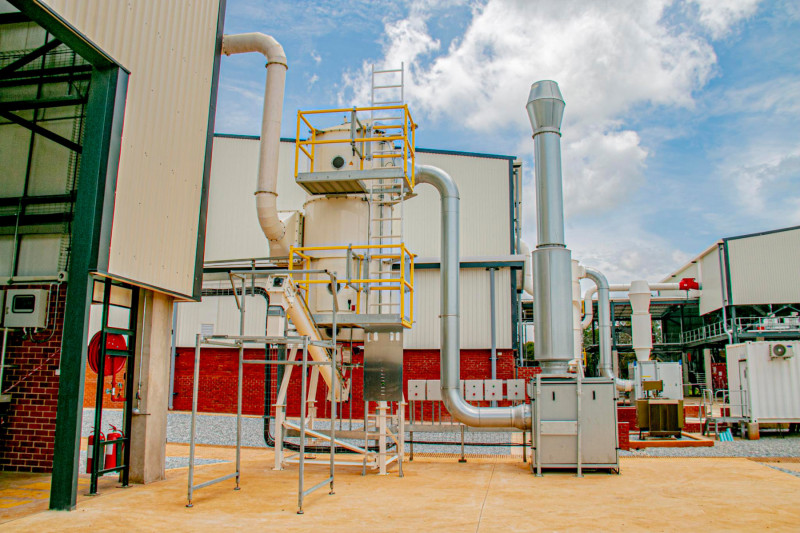
Foundation Seed Dryer outside - Credit: Bayer AG
Bayer to Support the Economy and Local Communities in the Kabwe Area
The new facility is anticipated to stimulate economic growth in the region by creating jobs and business opportunities. Bayer plans to employ 80 permanent staff members and over 100 seasonal workers and contractors at the site. Additionally, approximately 15,000 seasonal on-farm jobs will be generated through Bayer’s field operations and those of contract growers to produce the seeds.
Bayer is committed to being an active member of the communities it operates in. As such, two initiatives to support the communities around Kabwe are underway. The neighborhood next to the new facility will benefit from improved water accessibility and storage through a revived borehole for water supply, a new tank, and pipes, funded by Bayer.
As a life science company, Bayer is also supporting the local healthcare system. Currently, residents living near the site must travel up to 20 kilometers to access the nearest health facility, disproportionately affecting women and children. Based on a Public Private Partnership model in collaboration with Zambia’s Ministry of Health, the Municipality of Kabwe, the NGO Project Concern Zambia, and the local community, Bayer will fund the establishment of a new health center, which aims to provide essential healthcare services to more than 10,000 residents, including Bayer employees and their dependents.
“The new facility will help us improve food security, empower smallholder farmers, and support communities in numerous countries on the African continent. It’s also a great business opportunity for Bayer. We can’t wait to ramp up production," concluded Bill Anderson.
Bayer unterstützt mit neuer Produktionsanlage für Maissaatgut in Sambia Ernährungssicherheit für rund 30 Millionen Menschen
- 6,4 Millionen Kleinbauern in Subsahara-Afrika sollen 2025 von ertragsstarkem Maissaatgut aus Sambia profitieren, 2030 sollen es bis zu 10 Millionen sein
- Die neue Anlage unterstützt die Wachstumsstrategie der Bayer-Division Crop Science, ihr Geschäft auf dem Kontinent bis 2030 zu verdoppeln
- Die Investition fördert die Wirtschaft vor Ort durch Arbeitsplätze und unterstützt lokale Initiativen
Bayer hat heute in Kabwe, Sambia, eine Anlage für die Produktion von Maissaatgut eröffnet, einem wichtigen Grundnahrungsmittel in der Region. Mit der Investition in Höhe von 32 Millionen Euro, ergänzt durch weitere Investitionen in die Organisation und landwirtschaftliche Netzwerke, verdreifacht Bayer die Produktionskapazität für ertragsstarkes Maissaatgut in Sambia in diesem Jahr. Die Menge an Mais, die aus diesem Saatgut letztlich erzeugt werden kann, entspricht dem jährlichen Verbrauch von schätzungsweise 30 Millionen Menschen in der Region. Insgesamt 6,4 Millionen Kleinbauern aus Sambia und anderen Ländern Subsahara-Afrikas werden in diesem Jahr von dem Saatgut profitieren. Bis 2030 soll die Anzahl auf bis zu 10 Millionen steigen, denn die Produktionsleistung soll weiter zunehmen. Die Investition von Bayer ist die bislang zweitgrößte private Investition eines deutschen Unternehmens in Sambia.
„Millionen von Menschen auf der Welt haben keinen ausreichenden Zugang zu Nahrungsmitteln. Das gilt besonders für Subsahara-Afrika. Wir bei Bayer haben uns zum Ziel gesetzt, den Hunger auf der Welt zu bekämpfen. Wir freuen uns, dass wir mit unserer neuen Saatgutanlage in Sambia einen Beitrag dazu leisten können“, sagt Bill Anderson, Vorstandsvorsitzender von Bayer, der den Standort gemeinsam mit seiner Exzellenz Hakainde Hichilema, dem Präsidenten von Sambia, eröffnete.
Anlage unterstützt Kleinbauern und damit die Ernährungssicherheit
Obwohl Subsahara-Afrika über große Flächen an Ackerland und viel Potenzial für die Landwirtschaft verfügt, hat jeder Fünfte auf dem Kontinent nur unzureichenden Zugang zu Lebensmitteln und Nährstoffen. Hauptgründe hierfür sind begrenztes landwirtschaftliches Fachwissen und fehlender Zugang zu modernen Technologien. Mithilfe des neuen Standorts erhöht Bayer die Verfügbarkeit von qualitativ hochwertigem und zertifiziertem Saatgut. Dieses ist ertragsstärker und widerstandsfähiger gegenüber klimatischen Bedingungen und Krankheiten. Mit dem konventionell gezüchteten hybriden Maissaatgut können Landwirte aus Sambia und anderen Ländern der Region Nahrungsmittel effizienter und in größeren Mengen produzieren, vor allem in Kombination mit der Vermittlung landwirtschaftlichen Wissens. Dadurch erhöhen sie ihre Produktivität und können noch stärker zur Ernährungssicherheit beitragen.
Das gilt insbesondere für Kleinbauern, die Nahrungsmittel auf weniger als zehn Hektar Land anbauen und bis zu 70 Prozent der konsumierten Lebensmittel auf dem afrikanischen Kontinent produzieren. „Eine höhere Produktivität verbessert nicht nur die Ernährungssicherheit, sondern auch die Lebensgrundlage von Kleinbauern, ihren Familien und ihren Gemeinden“, sagt Debra Mallowah, Leiterin des Afrika-Geschäfts der Crop-Science-Division von Bayer. „Diese Investition ist ein weiterer Schritt in Richtung unseres Ziels, bis 2030 21,5 Millionen Kleinbauern in Afrika und insgesamt 100 Millionen weltweit zu erreichen.“
Investition ist wichtiger Teil der Wachstumsstrategie von Bayer in Afrika
Die Investition bringt zudem ein signifikantes Geschäftspotenzial für Bayer, da der afrikanische Markt als einer der am schnellsten wachsenden Märkte weltweit gilt und über sehr gute Voraussetzungen für die Landwirtschaft verfügt. Die Nachfrage nach der Bayer-Saatgutmarke Dekalb ist dort in den vergangenen Jahren so stark gestiegen, dass die Nachfrage das Angebot übertroffen hat. Die neue Produktionsanlage ist daher ein zentrales Element für das Afrika-Geschäft der Crop-Science-Division von Bayer, das sich bis 2030 verdoppeln soll.
Bis 2028 sind weitere 35 Millionen Euro vorgesehen, um Bayers Netzwerk für die Saatgutproduktion in Subsahara-Afrika auszubauen. Dabei kommt Bayers Expertise im Bereich der Maissaatgut-Züchtung und -Produktion eine große Bedeutung zu, da Mais in Afrika ein Grundnahrungsmittel ist. Das sambische Gericht „Nshima“ etwa, das aus Mais zubereitet wird, deckt allein 60 Prozent des täglichen Kalorienbedarfs ab.
Bayer unterstützt Wirtschaft und Gemeinden in der Region um Kabwe
Die neue Produktionsanlage unterstützt die Wirtschaft in der Region durch Arbeitsplätze und Geschäftsmöglichkeiten. Bayer plant für seinen neuen Standort derzeit mit 80 Festangestellten sowie mehr als 100 Saisonarbeitern und Auftragnehmern. Zusätzlich werden bei den Vertragslandwirten, die für Bayer das Saatgut auf ihren Feldern vermehren, schätzungsweise 15.000 weitere saisonale Jobs geschaffen.
Bayer ist aktiver Teil der Gemeinden, in denen sich das Unternehmen engagiert. Daher wurden zwei Initiativen gestartet, die die Gemeinden rund um Kabwe unterstützen sollen. Das benachbarte Dorf des Standorts profitiert von einem erneuerten Bohrloch für Wasser, einem neuen Tank und Rohren. Damit verbessert sich die Wasserversorgung vor Ort.
Als Life-Science-Unternehmen unterstützt Bayer auch das regionale Gesundheitssystem. Zurzeit müssen die Menschen vor Ort rund 20 Kilometer zurücklegen, um medizinische Versorgung zu erhalten. Darunter leiden vor allem Frauen und Kinder. Im Rahmen einer Öffentlich-privaten Partnerschaft mit dem sambischen Gesundheitsministerium, der Kommunalverwaltung von Kabwe, der NGO Project Concern Zambia und der lokalen Gemeinde finanziert Bayer ein neues Gesundheitszentrum. Damit erhalten mehr als 10.000 Menschen, einschließlich der Bayer-Beschäftigten und ihrer Familien, Zugang zu essenziellen Gesundheitsleistungen.
„Mit der neuen Saatgutanlage tragen wir zur Ernährungssicherheit bei, stärken Kleinbauern und unterstützen Menschen in zahlreichen afrikanischen Ländern. Darüber hinaus bietet der Standort wichtiges Geschäftspotenzial für Bayer. Wir können es kaum erwarten, die Produktion hochzufahren“, fasst Bill Anderson zusammen.


 Topics
 Species