United Kingdom
June 11, 2025
11 June 2025
The Hutton leads the world in scientific research and breeding programmes aimed at developing new potato varieties with desirable agronomic characteristics and resilience to external stresses, such as temperature extremes and diseases.
However, breeding potatoes is no simple task. Potato genetics underpins all breeding activities but even when all the desired traits are present in the parent plants, their offspring frequently inherit only a limited number of these traits.
This challenge arises because cultivated potatoes are typically tetraploid, meaning they possess four copies of their genome. These multiple genome copies can recombine freely, complicating the inheritance of specific traits.
This is where molecular markers come into play. These are specific DNA sequences or variations located at specific sites within the genome.
Molecular markers act as beacons within the genome, signalling to breeders whether the segment of DNA responsible for a particular trait is present or absent. Considerable research has been dedicated to identifying the genetic basis of key traits and converting this knowledge into informative molecular markers.
Professor Ingo Hein, Head of Potato Genetics at the Hutton, said, “We have harnessed state-of-the-art genomics technologies that enable researchers to analyse each of the four genome copies individually. This allows us to precisely tag only the beneficial DNA segment—known as a haplotype.
“By using a minimum sequence representation of the entire potato genome (which, at four times 840 million base pairs, is considerable in size), we can reliably detect the presence or absence of the specific DNA region associated with valuable traits. Our work has demonstrated the effectiveness of this approach for both large genomic regions of over a million base pairs, and very small ones around 20,000 base pairs.”
“We have harnessed state-of-the-art genomics technologies that enable researchers to analyse each of the four genome copies individually. This allows us to precisely tag only the beneficial DNA segment—known as a haplotype.”
Professor Ingo Hein, The James Hutton Institute
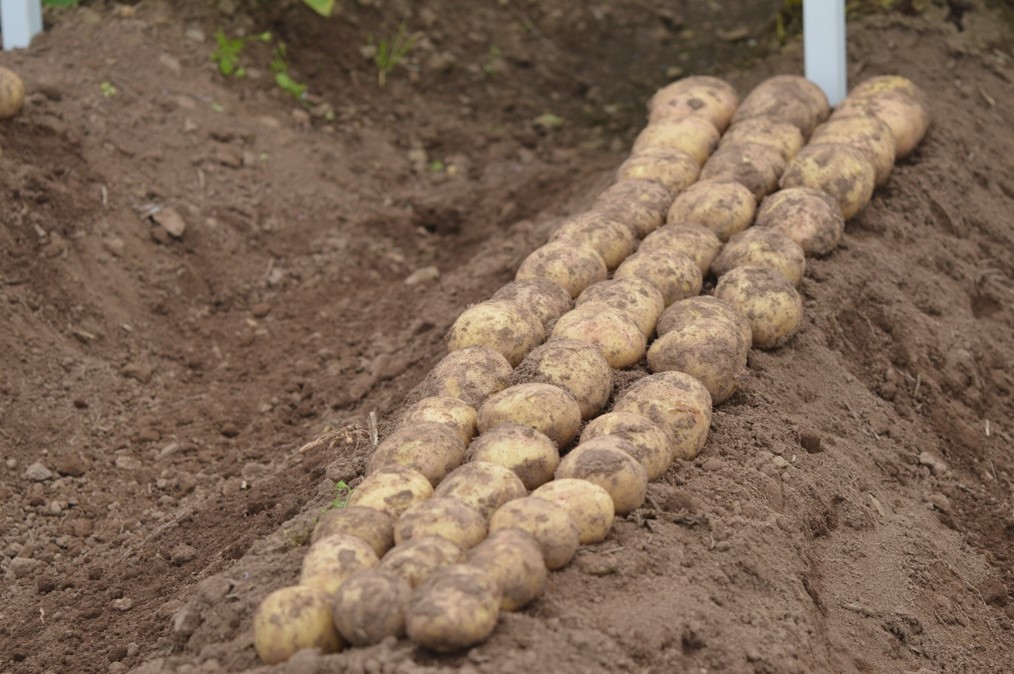
This approach will have a huge impact on farmers and the industry. By leveraging the potato genome and tagging functional resistance genes that protect crops from pathogens, we can significantly accelerate the breeding of new varieties and enhance crop protection in a changing environment.
This work is not limited to potato. It can be adapted to any crop, provided sufficient genomic and genetic information is available. It emphasises the crucial role of fundamental research in enabling the translation of science into sustainable crop production that can ultimately lead to reliable, resilient crops that offer a route to food security.


 Topics
 Species