Murcia, Spain
July 14, 2025
KWS Vegetables is enhancing its research: A state-of-the-art research hub in Murcia, Spain, dedicated to discovering disease-resistant plant materials for tomato, cucumber, pepper, melon, and watermelon, has officially opened. With this facility, the company is strengthening its R&D capabilities for these five crops while continuing to build up its young Vegetables business unit worldwide. The new hub marks an important milestone in KWS Vegetables’ ambition to develop innovative, reliable seed solutions for growers across the globe.
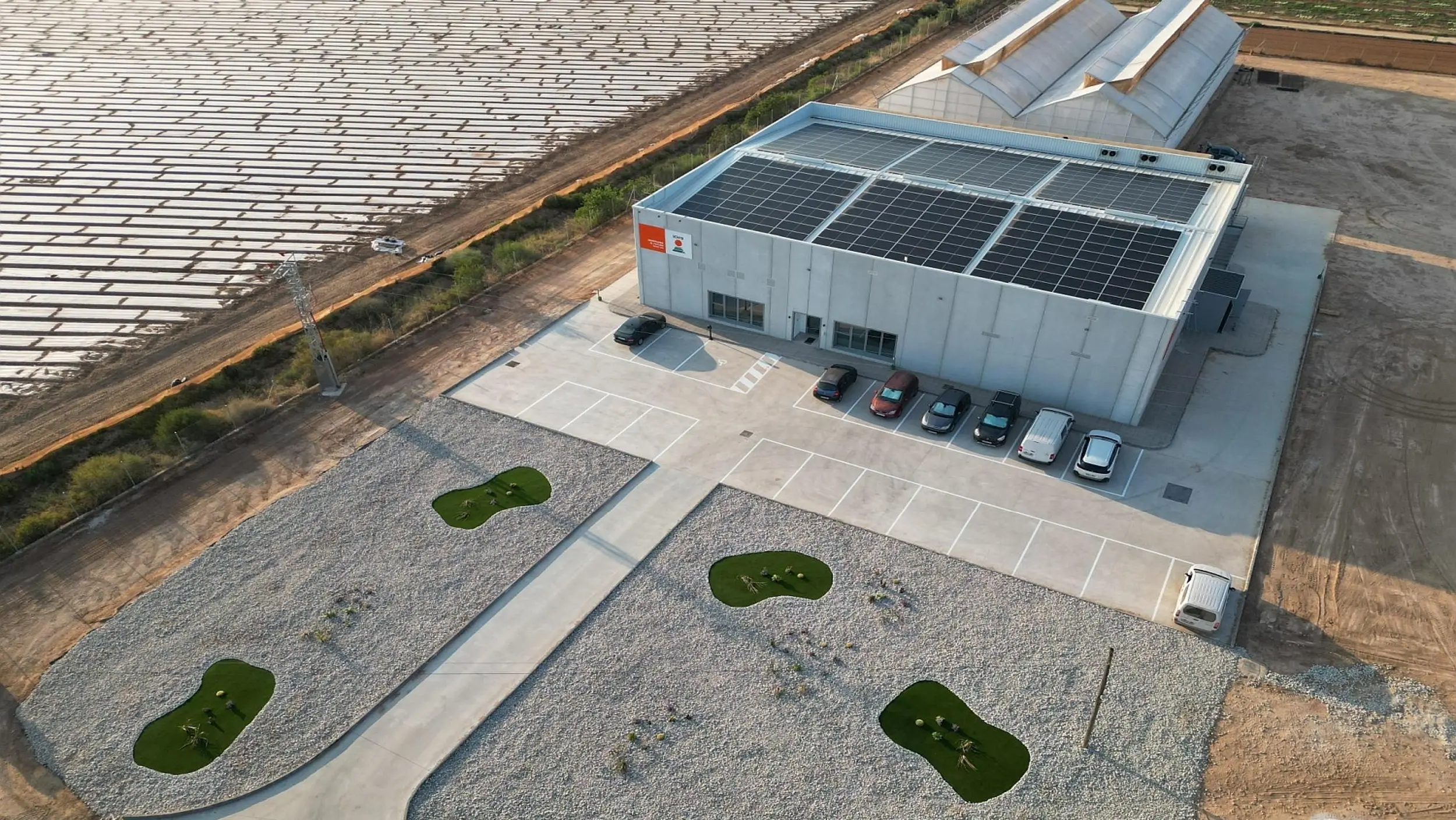
The new facility, which will employ seven phytopathology experts, comprises offices, phytotrons, laboratory space and a greenhouse – with another one planned for next year – all spread over 3,000 square meters. A 110 kWh photovoltaic system on the roof of the building generates sustainable energy for the entire site.
“Our new phytopathology station serves as a central hub for plant pathology research on our fruit vegetable crops. It will enable us to respond even more quickly, agilely and appropriately to challenges in vegetable cultivation in the future,” explains Daniel Jimenez, Head of Crop Pathology at KWS Vegetables. “We want to provide growers with varieties that are not only productive, but also resilient and reliable under pressure.”
Alongside Almería, Murcia is KWS’s second strategic research and breeding location in the important Spanish vegetable market. The approximately 17-hectare site has been home to a breeding station with greenhouses as well as an office since 2023. The location is strategically advantageous for plant pathology research because many relevant plant diseases occur in the region and can be studied on site, enabling faster insights, better data and more targeted breeding decisions. This proximity allows KWS to help with global disease challenges from a local base, driving solutions that matter in the field.
Background: New Vegetables business unit
KWS entered the vegetable seed market in 2019 with the aim of becoming a significant market player. To this end, the company is pursuing a long-term strategy that, in addition to selling licensed varieties and making targeted acquisitions, focuses primarily on the organic expansion of its own breeding activities. An international network of research and breeding stations has been established for this purpose, which now comprises ten sites in the Netherlands, Brazil, Spain, Turkey, Italy and Mexico.
KWS expects to be able to launch new, innovative varieties for all nine vegetable crops in its portfolio within the next three years – built on collaboration and scientific excellence.
KWS Vegetables eröffnet neuen Phytopathologie-Hub in Spanien
KWS Vegetables stärkt seine Forschung: In Murcia, Spanien, wurde ein hochmodernes Forschungszentrum eingeweiht, das der Suche nach krankheitsresistentem Pflanzenmaterial für Tomate, Gurke, Paprika, Melone und Wassermelone dient. Mit der Anlage erweitert das Unternehmen seine F&E-Kapazitäten für diese fünf Kulturarten und treibt zugleich den Ausbau seiner jungen Business Unit für Gemüse weiter voran. Das neue Zentrum ist ein wichtiger Meilenstein für das Ziel von KWS Vegetables dar, innovative und zuverlässige Saatgutlösungen für Kundinnen und Kunden weltweit zu entwickeln.
Die neue Anlage, in der künftig sieben Expertinnen und -Experten tätig sein werden, umfasst auf 3.000 Quadratmetern Büros, Phytotrone, Laborräume und ein Gewächshaus. Für das nächste Jahr ist ein weiteres Gewächshaus geplant. Eine 110 kWh Photovoltaikanlage auf dem Dach des Gebäudes erzeugt nachhaltige Energie für den gesamten Standort.
„Unsere neue Phytopathologiestation dient als zentraler Hub für die phytopathologische Forschung rund um unsere Fruchtgemüsekulturen. Sie wird es uns ermöglichen, in Zukunft noch schneller, agiler und angemessener auf Herausforderungen im Gemüseanbau zu reagieren“, erklärt Daniel Jimenez, Head of Crop Pathology bei KWS Vegetables. „Wir möchten Erzeugern Sorten anbieten, die nicht nur ertragsstark, sondern auch widerstandsfähig und zuverlässig unter Druck sind.“
Neben Almería ist Murcia der zweite strategische Forschungs- und Züchtungsstandort von KWS im wichtigen spanischen Gemüsemarkt. Auf dem rund 17 Hektar großen Gelände befindet sich seit 2023 eine Zuchtstation mit Gewächshäusern und einem Büro. Der Standort ist besonders geeignet für phytopathologische Forschung, da in der Region viele relevante Pflanzenkrankheiten auftreten und vor Ort untersucht werden können. Dies ermöglicht schnellere Erkenntnisse, bessere Daten und gezieltere Züchtungsentscheidungen.
Hintergrund: Neue Business Unit Vegetables
KWS ist 2019 im Markt für Gemüsesaatgut aktiv und verfolgt das Ziel, eine signifikante Marktposition zu erschließen. Das Unternehmen verfolgt eine langfristige Strategie, die neben dem Verkauf von lizenzierten Sorten und gezielten Akquisitionen vor allem den organischen Aufbau eigener Züchtungsaktivitäten vorsieht. Hierzu wurde ein internationales Netzwerk von Forschungs- und Züchtungsstationen aufgebaut, das inzwischen zehn Standorte in den Niederlanden, Brasilien, Spanien, der Türkei, Italien und Mexiko umfasst. KWS rechnet damit, innerhalb der nächsten drei Jahre neue, innovative Sorten für alle neun Gemüsekulturen im Portfolio auf den Markt bringen zu können.


 Topics
 Species