United Kingdom
January 8, 2026
Maize: The New Gamechanger for Doddington Dairy’s Forage and Sustainability Strategy
Farming in the rain shadow of the Cheviot Hills and with predominantly light sandy soils, Neill and Jackie Maxwell and their team at Doddington Dairy find growing grass to be a challenge.
Fodder beet bolsters the ration for the 400 strong crossbred milking herd, but what they have really wanted to include for quite a number of years is maize.
 Neill and Jackie Maxwell make French-style raw milk cheese and ice cream at Doddington Dairy and won Best Food Producers in the BBC Food and Farming Awards in 2015.
Based near Wooler, in Northumberland, on the same latitude as Moscow and the south of Sweden, that’s not been an option, at least not until the 2025 season.
“Maize is a potential gamechanger for us, particularly on a farm where grass growth is often difficult,” explains Neill. “Our aim is to produce as much as possible from homegrown crops, so to have our own maize in the ration will be a big step forward.
“We did try growing it around 15 years ago, but without any success. Growing maize under plastic has seemed like our only option, but we would not want the risk of microplastics in our soils and we have a strong sustainability agenda across the business.
”We decided to try growing maize unprotected again after attending an alternative forages workshop where we heard about the progress in maize breeding.
“From our experience this summer, it’s quite possible that maize will perform best for us in the years that are the most difficult to grow grass. Farming is about mitigating risk, so having another crop in the mix that can add great value to the ration whilst bolstering our overall forage output will be a great result.”
The event Neill refers to was organised by Nickerson and featured a presentation from Limagrain Field Seeds UK on the increased potential of earlier maturing varieties. Seed specialist David Watson, who hosted the meeting, helped the Doddington Dairy team in the choice of variety and the management of the crop.
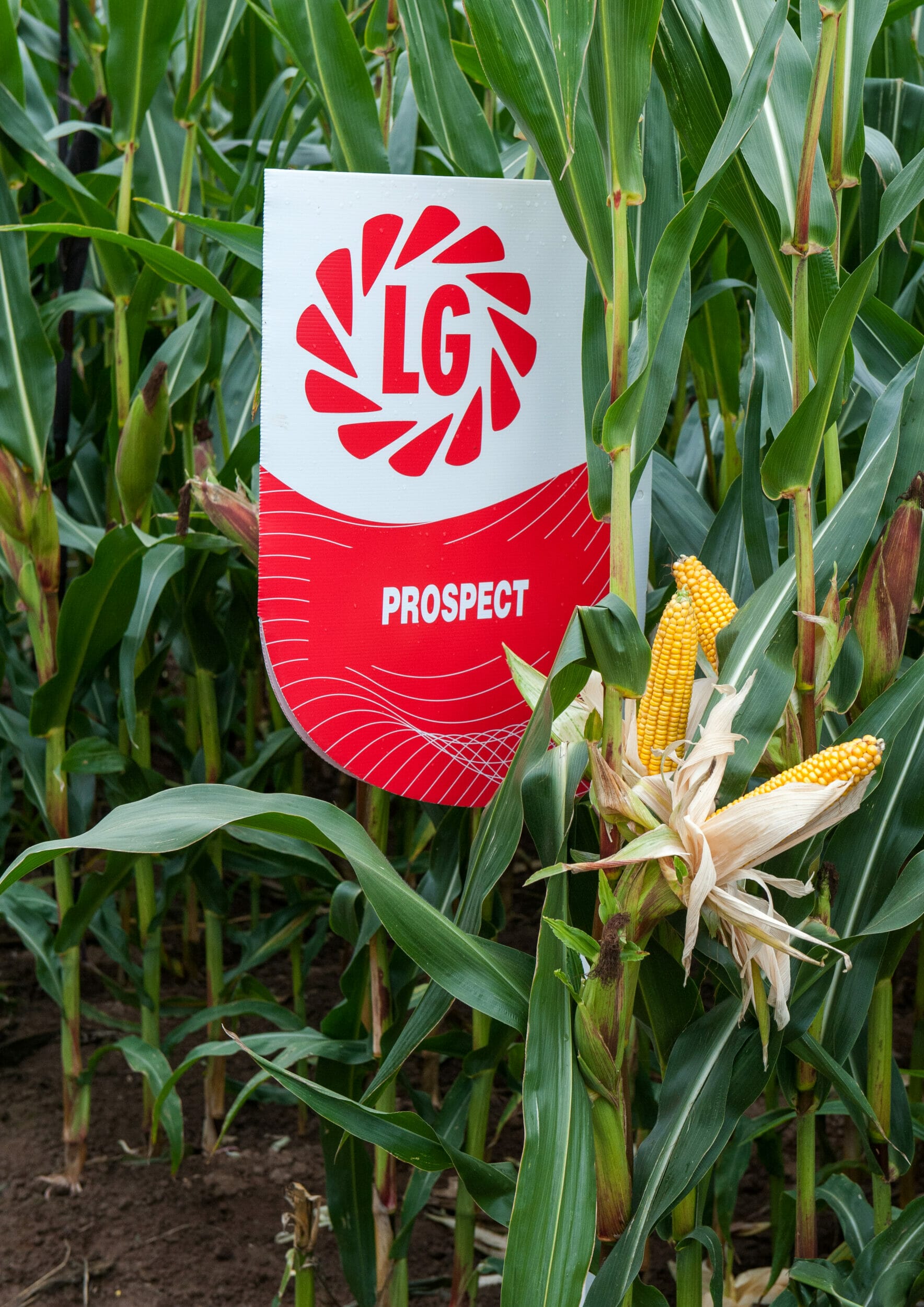
“I advised growing a variety called Prospect, because I knew it had a great track record and felt it would best suit the site,” he explains. “With an FAO of 170, it’s an early variety, though not the earliest produced from the Limagrain breeding programme, but the farm has light soils and the fields in question have a southerly aspect, so I felt sure it could do well. The early vigour certainly helped the crop and with high starch and very good cell wall digestibility it should deliver what the farm wants in the ration.”
The farm grew a cautious 21 acres in 2025, on land close to the farmstead. After plentiful applications of muck and slurry, the sandy ground was ploughed and cultivated before being drilled and then rolled. A compound fertiliser was included down the spout and nitrogen was applied onto the seedbed at 125kg N/ha. A standard programme of pre- and post-emergence herbicides, as advised by the farm’s agronomist, were the only other inputs.
“We drilled on 1st May in dry conditions, but there was moisture in the seedbed,” recalls Neill. “The crop was out of the ground quickly, and then it rained in June. Thereafter conditions remained largely dry.
“It was not the conditions for growing grass, but the maize continued to thrive. Our biggest issue turned out to be the crows feasting on the maize seedlings.”
The crop was fully mature and harvested on 30th September, yielding 18.5 tonnes/acre at 33% dry matter, but the on-board yield monitor on the forager revealed some areas of the field yielding 22 to 23 tonnes/acre.
“The variation in yields was almost certainly due to the crow damage,” adds Neill. “Despite that, we’re delighted with how the crop has performed, and particularly with the earliness as it has allowed us plenty of time to drill a following crop of wheat. We don’t ever leave bare ground over winter, so such early maturity is a big factor in the crop being viable for us.”
The farm, run by Neill and Jackie Maxwell, their herd manager James Kelly and his dedicated team, extends to 1,200 tenanted acres. Wheat, barley and fodder beet are grown across about 300 acres, with all crops fed at home.
Calving all year round, the milking herd at Doddington Dairy averages around 8,500 litres/cow. Milk solids are particularly important, with around 20% of production going into the farm’s specialist French-style raw milk cheeses and ice cream. The majority of the milk is sold on a contract to Arla.
Maize has been a gamechanger for Jackie and Neill.
“We’re striving all the time to lower our carbon footprint and maximise sustainability,” continues Neill. “So, despite the challenges, we try to make as much as we can from grazing, and will aim to have some cows at grass from the beginning of April through until Christmas if we possibly can, as well as making up to four cuts of grass silage.
From this winter, maize will be included in the milking ration for the first time, replacing a proportion of the grass silage and potentially some of the bought-in straights. The aim is to take the pressure off grass production and also boost the performance of the cows at a critical time.
“We’ll include maize in the ration for the early lactation cows, to maximise intakes and yields,” says Neill. “We’ll go into it steadily at first, but do see great potential going forward.”
The milking ration is fed twice daily, after milking, not least to avoid the risk of cows gorging on fodder beet, which – once available – is fed at a rate of 15kg/cow/day. Also included is a set level of 12kg/cow of concentrate feed, fed as straights, as well as ground maize, soya hulls, barley and wholecrop wheat. There is no bought in compound feed or soya.
“Our herd manager James is first class and I know he and his team are really looking forward to feeding maize,” concludes Neill. “It will allow us to reduce our reliance on grass, making more milk at a similar cost, and that’s all building sustainability into the business and reducing our exposure to risk. If all goes as we hope, we’ll look to increase the maize acreage next year by two or three times.”


 Topics
 Species