Ithaca, New York, USA
May 1, 2026
The Boyce Thompson Institute (BTI) is pleased to announce that Dr. Georg Jander and Delanie Sickler, Education and Outreach Director at BTI, have received a multi-year award from the U.S. Department of Agriculture’s Food and Agriculture Non-Formal Education (FANE) program. The funding will support an ambitious new initiative titled P-BIOTEK: Plant Biotechnology Innovation, Outreach, Training, and Education for K-12 Students.
This four-year project aims to expand access to biotechnology education for K-12 students, particularly those from underserved communities in rural Upstate New York, while fostering meaningful engagement between scientists and the public.
“We are excited to work with many incredible community partners and youth leaders to create an engaging series of modules and activities to allow youth and their communities to be an active participant in conversations around biotechnology,” said Sickler.
Through a collaboration between BTI, Cornell University, New York State 4-H, Norfolk Healthy Produce LLC, and Science in Real Life, the program will create hands-on learning opportunities that introduce students to plant biotechnology, bioengineering, and science communication.
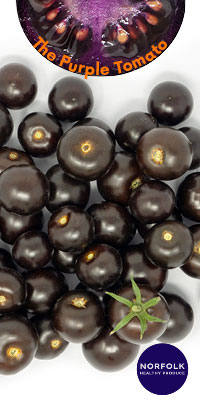
At the heart of the initiative is a community science program where approximately 100 students each year grow and evaluate The Purple Tomato™, a bioengineered variety rich in anthocyanins. Participants will help develop educational modules explaining how these crops are created and explore broader topics such as GMOs and gene editing. These modules will be made publicly available to expand the program’s impact beyond direct participants.
Each year, a select group of six high school students will take their learning further through a seven-week paid summer internship at BTI and Cornell University. During the program, students will receive hands-on training in plant molecular biology, conduct research, and present their findings at a scientific symposium. Participants will also complete science communication projects designed to make complex biotechnology topics more accessible to wider audiences.
“The new FANE grant will allow us to continue a successful research program for high school students that we have organized at BTI each summer for more than 20 years,” said Jander.
The initiative is expected to directly support more than 400 youth participants over the course of the grant, with hundreds more benefiting indirectly through educational materials, online modules, and community engagement.
Building on a Legacy of Community Science
The community science component of this project reflects decades of work by researchers and organizations dedicated to connecting scientific discovery with public participation. By placing community needs at the forefront, these efforts have helped shape a more inclusive and collaborative approach to research.
Programs such as those led by the Cornell Lab of Ornithology have demonstrated the power of community science to engage the public in meaningful data collection and discovery. At BTI, Dr. Joyce Van Eck has advanced this model through the institute’s Groundcherry Community Science project, which invited participants across the country to contribute to research on underutilized fruit crops.
Her work not only provided hands-on scientific experiences for community members but also generated valuable insights to guide future research and improve crop varieties for gardeners and farmers alike. This legacy of engagement serves as a foundation for the P-BIOTEK program’s approach to education and outreach.
Meeting a Growing Need
As advancements in biotechnology continue to reshape agriculture, and as regulatory pathways for bioengineered crops become more streamlined, the need for accessible, accurate public education has never been greater. The P-BIOTEK program addresses this need by combining experiential learning, workforce development, and community engagement.
By empowering students to explore biotechnology firsthand and share their discoveries, the program helps spark scientific curiosity and encourages thoughtful conversations about the future of food.


 Topics
 Species