Wageningen, The Netherlands
August 21, 2014
By Wageningen University, Plant Research International (PRI)
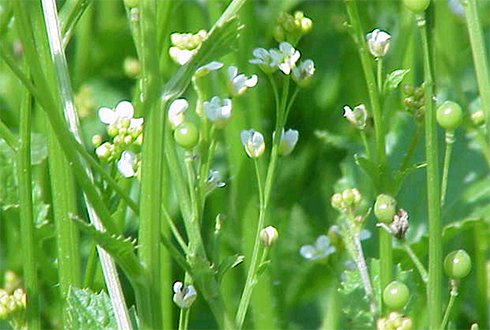
It is possible to apply genetic modification to the crop crambe so it meets market demands and takes into account what modern society wants. These are the results of research for which Weicong Qi will receive his PhD on 27 August at Wageningen University, part of Wageningen UR.
Qi has developed a technique to genetically modify crambe without marker genes appearing in the crop. Using this technique he was able to steer the manufacture of metabolic substances in a direction that would make the crop more attractive to the processing industry.
Crambe (Crambe abyssinica), a bio-based economy crop, is a source of renewable raw materials that will allow industry to become less dependent on petroleum, thus leading to a more sustainable economy.
Biobased Economy
At the moment, however, the quantities of oil this crop produces are too small to meet the needs of industry, which has a particular interest in erucic acid. That is why crambe has been bred for a number of decades. It seems that when Crambe is crossbred, it can produce, at most, 65% erucic acid: too little to make the crop economically viable. That is why the Chinese PhD student Weicong Qi investigated the possibility of enhancing erucic acid production in crambe by applying genetic modification.
Genetically modifying crambe
Qi has developed a workable system for genetically modifying crambe, and one that does not lead to marker genes in the crop. He used the technique to transfer a gene to crambe which meant the plant could build oil molecules with not two, but three erucic acid molecules on the three available positions on each oil molecule (glycerol). In this way Qi managed to increase the erucic acid levels to more than 75%. According to his co-supervisor, Frans Krens, this is an important step forward. "It's not the whole story, but Qi has shown that this approach can work. A start has been made”
Crambe kan dankzij gentech een nog beter oliegewas worden
Het is mogelijk om het gewas crambe via genetische modificatie aan te passen aan de wensen van de markt, tegelijk rekening houdend met de wensen van de maatschappij. Dat blijkt uit het onderzoek waarop Weicong Qi op 27 augustus hoopt te promoveren aan Wageningen University, onderdeel van Wageningen UR.
Qi ontwikkelde een techniek waarmee crambe genetisch gemodificeerd kan worden zónder dat zogenaamde merkergenen in het gewas komen. Met die techniek was hij in staat om de aanmaak van inhoudsstoffen te sturen in een richting die het gewas voor de verwerkende industrie aantrekkelijker maakt.
Biobased Economy
Crambe (Crambe abyssinica) is een gewas voor de biobased economy: het levert hernieuwbare grondstoffen voor de industrie. Die kan daarmee minder afhankelijk worden van aardolie, waardoor er een meer duurzame economie kan ontstaan.
Het gewas produceert op dit moment echter nog te kleine hoeveelheden olie die voldoet aan de wensen van de industrie. Er is vooral veel belangstelling voor erucazuur. Crambe wordt al tientallen jaren veredeld om de productie van erucazuur te verhogen. Via kruisingsveredeling lijkt een erucazuurgehalte van maximaal 65% haalbaar. Dat is te weinig om het gewas economisch rendabel te maken. Daarom onderzocht de Chinese promovendus Weicong Qi de mogelijkheden om de productie van ecurazuuur te verbeteren door crambe genetisch te modificeren.
Genetisch modificeren van crambe
Qi ontwikkelde een goed werkend systeem voor het genetisch modificeren van crambe waarbij geen merkergenen in het gewas terechtkomen. Met die techniek bracht hij een gen naar crambe over dat er voor zorgt dat de plant oliemoleculen kan bouwen met niet twee, maar drie erucazuurmoleculen op de drie beschikbare posities per oliemolecuul (glycerol). Het lukte Qi om zo het erucazuurgehalte te verhogen tot meer dan 75%. Volgens zijn co-promotor, Frans Krens, is dat een belangrijke stap. “We zijn er nog niet, maar Qi laat zien dat deze aanpak werken kan. Het begin is er."


 Topics
 Species