A ProMED-mail post
<http://www.promedmail.org>
ProMED-mail is a program of the
International Society for Infectious Diseases <http://www.isid.org>
Date: October 2014
Source: Plant Disease [edited]
<http://apsjournals.apsnet.org/doi/abs/10.1094/PDIS-05-14-0509-PDN>
[Ref: R Tahzima et al (2014): First Report of '_Candidatus_ Liberibacter solanacearum' on Carrot in Africa. Plant Disease 98, 1426; DOI: 10.1094/PDIS-05-14-0509-PDN]
-------------------------------------------------------------------------------------
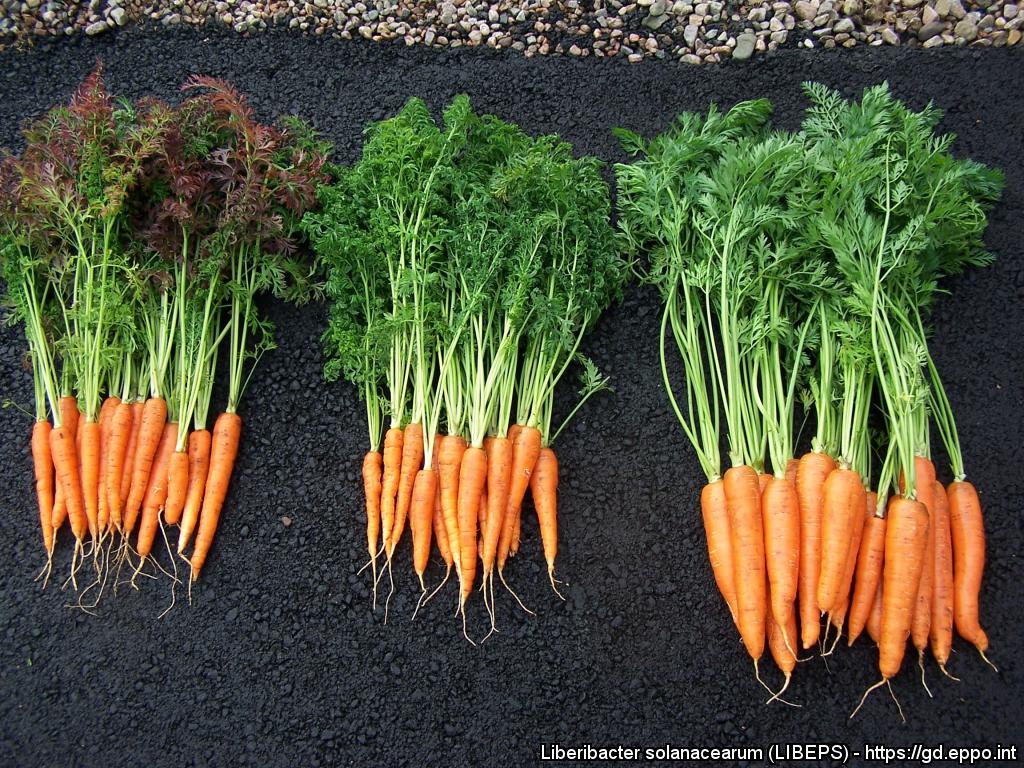
Carrot plants (_Daucus carota_) exhibiting symptoms of yellowing, purpling, and curling of leaves, proliferation of shoots, formation of hairy secondary roots, general stunting, and plant decline were observed in commercial fields in the Gharb region of Morocco. About 30 percent of the plants in each field were symptomatic and plants were infested with unidentified psyllid nymphs.
Ten symptomatic and 2 asymptomatic plants from 3 fields were tested for phytoplasmas and spiroplasmas by PCR but neither was detected. PCR tests for '_Ca._ L. solanacearum' yielded specific bands from all 10 symptomatic carrots of 1168 bp, 770 bp and 669 bp, indicating the presence of '_Ca._ L. solanacearum.' No bands were detected in asymptomatic plants. Amplicons from 3 samples (one plant/field) showed [between] 98 and 100 percent identity to respective '_Ca._ L.
solanacearum' sequences [and] identified the presence of both haplotypes D and E.
To our knowledge, this is the 1st report of the occurrence of '_Ca._ L. solanacearum' in Morocco and Africa, suggesting a wider distribution of the bacterium in carrot crops in the Mediterranean region, including North Africa. '_Ca._ L. solanacearum' has caused economic damages to carrot and celery crops in the Canary Islands and mainland Spain, France, Sweden, Norway, and Finland. This bacterium has also caused millions of dollars in losses to potato and several other solanaceous crops in the United States, Mexico, Central America, and New Zealand. Given its economic impact on numerous important crops worldwide, it is imperative that preventive measures be taken to limit its spread.
--
Communicated by:
ProMED-mail
<promed@promedmail.org>
[Only a few members of _Candidatus_ Liberibacter have been characterised so far, including the pathogens causing citrus greening (huanglongbing, HLB; for more information see previous ProMED-mail posts in the archives). HLB, one of the most damaging diseases of citrus, is limited to these crops due to the host specificity of its vector, the citrus psyllid.
A new liberibacter species was found to be associated with zebra chip
(ZC) and psyllid yellows (PY) diseases of potato, as well as a new yellowing disease of tomato and capsicum crops in New Zealand. The new pathogen was given the preliminary name of _Ca._ Liberibacter solanacearum (Lso; synonym _Ca._ L. psyllaurous). Lso is transmitted by the potato (or tomato) psyllid (_Bactericera cockerelli_), which has a much wider host range than the HLB vector, including species in
20 plant families; additional vector species are also being identified further extending its potential host range and economic impact.
Lso has since also been associated with yellowing diseases of other solanaceaous crops (physalis, tomatillo, aubergine, tamarillo,
tobacco) and some crops in the family Apiaceae (carrot, celery).
Currently the species is divided into 4 haplotypes: A & B affecting Solanaceae, C & D affecting Apiaceae. Both groups of haplotypes have been reported from the Americas and New Zealand (for example, ProMED-mail post 20090515.1819).
In Europe, carrot haplotypes have been reported in several countries (ProMED-mail post 20120713.1199961), but potato haplotypes are still considered absent in the European/Mediterranean region and have been included in the quarantine lists of the European Plant Protection Organisation (EPPO).
Maps
Morocco:
<http://www.un.org/Depts/Cartographic/map/profile/morocco.pdf>
Africa, overview:
<http://worldatlas.com/webimage/countrys/africa/maps/africa.htm>
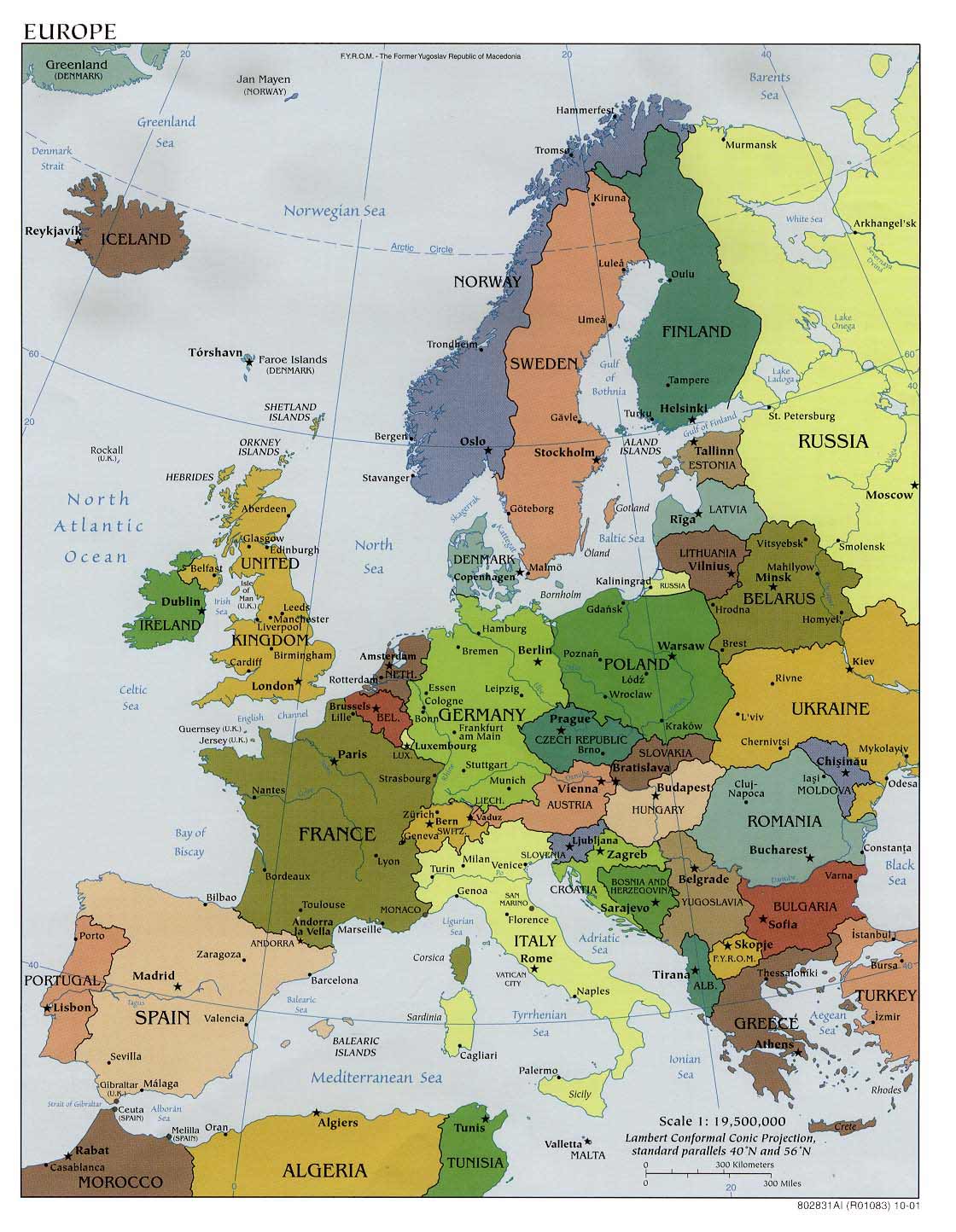
Europe, overview:
<http://www.edinphoto.org.uk/0_MAPS/0_map_europe_political_2001_enlarged.jpg>
Pictures
Lso symptoms on carrot:
<https://gd.eppo.int/media/data/taxon/L/LIBEPS/pics/1024x0/1939.jpg>
(compared with healthy)
Psyllid yellows/ZC affected potato plants:
<http://www.forestryimages.org/images/3072x2048/1490010.jpg> and <http://www.ext.colostate.edu/PUBS/INSECT/insimg/05540F04_Web.jpg>
ZC affected potato tubers:
<http://www.dnature.co.nz/assets/Uploads/Liberibacter/Liberibacter.jpg>,
<http://cdn18.theglobalherald.com/wp-content/uploads/2012/10/zebra-chip-disease-in-a-potato.jpg>
and
<http://www.digitaljournal.com/img/4/2/9/0/i/4/1/7/o/8ab1aa702fece1872973ac17aec85b6f.jpg>
(processed, compared with healthy)
Lso symptoms on other solanaceous hosts:
<http://www.dnature.co.nz/assets/Uploads/Liberibacter/_resampled/resizedimage300310-Libcapsicum.jpg>
(capsicum),
<http://www.biosecurity.govt.nz/files/images/blo-tomato-03.jpg>
(tomato) and
<http://nwdistrict.ifas.ufl.edu/phag/files/2014/10/Fig-7-PY-Dufault.jpg>
(tomato fruit)
Lso, microscopy:
<http://bacmap.wishartlab.com/system/images/1223/medium/Candidatus_Liberibacter.jpg?1319706599>
Potato psyllids:
<http://insects.tamu.edu/images/insects/common/images/a-txt/aimg91.html>
(adults) and
<http://www.insectimages.org/browse/detail.cfm?imgnum=1327131>
(immatures)
Links
Information on _Ca._ Liberibacter solanacearum:
<http://www.eppo.int/QUARANTINE/Alert_List/bacteria/Liberibacter_psyllaurous.htm>,
<http://onlinelibrary.wiley.com/doi/10.1111/epp.12043/pdf>,
<http://www.fera.defra.gov.uk/plants/plantHealth/pestsDiseases/documents/candidatusLiberibacterSolanace.pdf>
(with pictures),
<http://www.cabi.org/isc/datasheet/109434>,
<http://www.rhizobia.co.nz/downloads/Weir_CS23.pdf> and via <http://archives.eppo.org/EPPOReporting/2012/Rse-1209.pdf>
Tuber transmission of Lso:
<http://link.springer.com/article/10.1007/s10658-010-9702-1/fulltext.html>
Lso haplotypes:
<http://link.springer.com/article/10.1007/s10658-012-0121-3/fulltext.html>
and
<http://www.appsnet.org/publications/Potato_Diseases_Workshop/9.%20Poliakoff_C%20liberabacter%20solanacearum%20in%20carrot%20France.pdf>
Information on potato zebra chip disease:
<http://panhandle.unl.edu/c/document_library/get_file?folderId=606641&name=DLFE-13907.pdf>
(with pictures) and
<http://www.digitaljournal.com/article/257488>
Information on potato psyllids:
<http://texasinsects.tamu.edu/aimg91.html>
_Ca._ L. solanacearum taxonomy:
<http://www.uniprot.org/taxonomy/556287>
Genus _Ca._ Liberibacter taxonomy and species list:
<http://beta.uniprot.org/taxonomy/34019>
EPPO A1 quarantine list:
<http://www.eppo.int/QUARANTINE/listA1.htm>
- Mod.DHA]
[See Also:
2012
----
Liberibacter, vegetable crops - multicountry 20120713.1199961
2011
----
Zebra chip, potato - USA, New Zealand: updates 20110915.2812
2009
----
Liberibacter, solanaceous crops - multicountry 20090515.1819
2008
----
Novel pathogens, tomato, potato - USA 20080820.2593 Liberibacter, solanaceous crops - New Zealand, USA 20080725.2269 Liberibacter, tomato & capsicum - New Zealand: new pathogen
20080604.1781
2007
----
Zebra chip disease, potato - USA: research 20070530.1751]


 Topics
 Species