A ProMED-mail post <http://www.promedmail.org>
ProMED-mail is a program of the International Society for Infectious Diseases <http://www.isid.org>
Date: October 2017
Source: European Plant Protection Organization (EPPO) Reporting Service 10/2017/198 [edited] <http://archives.eppo.int/EPPOReporting/2017/Rse-1710.pdf>
1st report of '_Candidatus_ Liberibacter solanacearum' in Greece
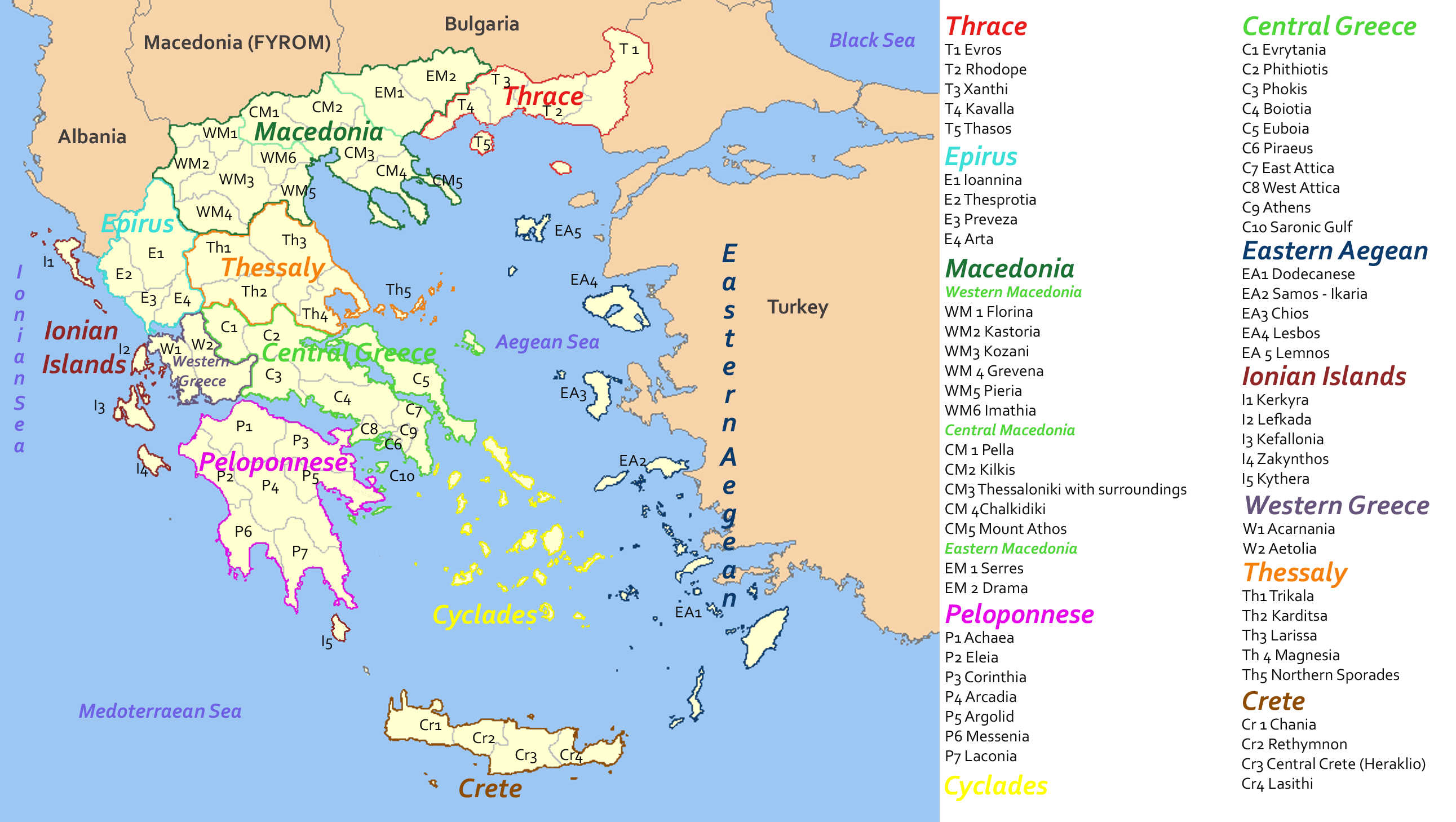
In July 2016, a sample of carrot plants (_Daucus carota_ cv. Dordogne) showing suspicious symptoms (formation of secondary taproots) was collected [in the district of] Boeotia in [the region of Thessaly and] Central Greece. Results of the analysis (PCR) confirmed the presence of '_Candidatus_ Liberibacter solanacearum' [Lso] (potato haplotypes are listed in the EPPO A1 List) in the symptomatic carrot sample.
In addition, [Lso] was detected in archived DNA from leaves of 3 carrot plants (cv. Newhall) [collected] in September 2014 from an area located approximately 18 km away [from the above location]. These plants were showing yellowish and purple leaf discolorations, as well as stunted shoots.
Further sequence analysis indicated that all strains of [Lso] identified so far in Greece belong to haplotype D. This is the first time that '_Ca._ L. solanacearum' is reported in Greece.
--
Communicated by: ProMED-mail <promed@promedmail.org>
[Only a few members of _Candidatus_ Liberibacter have been characterised so far, including the pathogens causing citrus greening (huanglongbing, HLB; for more information see previous ProMED-mail posts in the archives). HLB, one of the most damaging diseases of citrus, is limited to these crops due to the host specificity of its vector, the citrus psyllid.
A new liberibacter species was found to be associated with zebra chip
(ZC) and psyllid yellows (PY) diseases of potato, as well as a new yellowing disease of tomato and capsicum crops in New Zealand. The new pathogen was given the preliminary name of _Ca._ Liberibacter solanacearum (Lso; synonym _Ca._ L. psyllaurous). Lso has since also been associated with yellowing diseases of other solanaceous crops (physalis, tomatillo, aubergine, tamarillo, tobacco) and some crops in the family Apiaceae (carrot, celery). Main vectors of Lso are the potato psyllid (_Bactericera cockerelli_) in solanaceous host and carrot psyllids (_Trioza apicalis_, _Bactericera trigonica_) in Apiaceae. These vectors have a much wider host range than the HLB vector and additional vector species are also being identified, further extending potential host range and economic impact of Lso.
Currently the Lso species is divided into 5 haplotypes: A and B affecting Solanaceae; and C, D, and E affecting Apiaceae. Both groups of haplotypes have been reported from the Americas and New Zealand.
Carrot haplotypes have previously been reported from several European countries (ProMED-mail posts http://promedmail.org/post/20120713.1199961,
http://promedmail.org/post/20151009.3702151, and http://promedmail.org/post/20161130.4666613), northern Africa (ProMED-mail post http://promedmail.org/post/20141121.2978030) and the Middle East (ProMED-mail post http://promedmail.org/post/20170130.4803773).
Potato haplotypes A and B are still considered absent from the European/Mediterranean region. However, haplotype E was recently detected in potatoes in Spain [ProMED-mail post http://promedmail.org/post/20170802.5222241], representing the 1st report of potatoes being affected by Lso in Europe, as well as the 1st report of a haplotype being able to affect both Apiaceae and Solanaceae. While it was not stated whether typical zebra chip symptoms were observed in potatoes infected with haplotype E, the finding suggests that a lot more research is needed on epidemiology, biology and distribution of Lso worldwide.
Maps
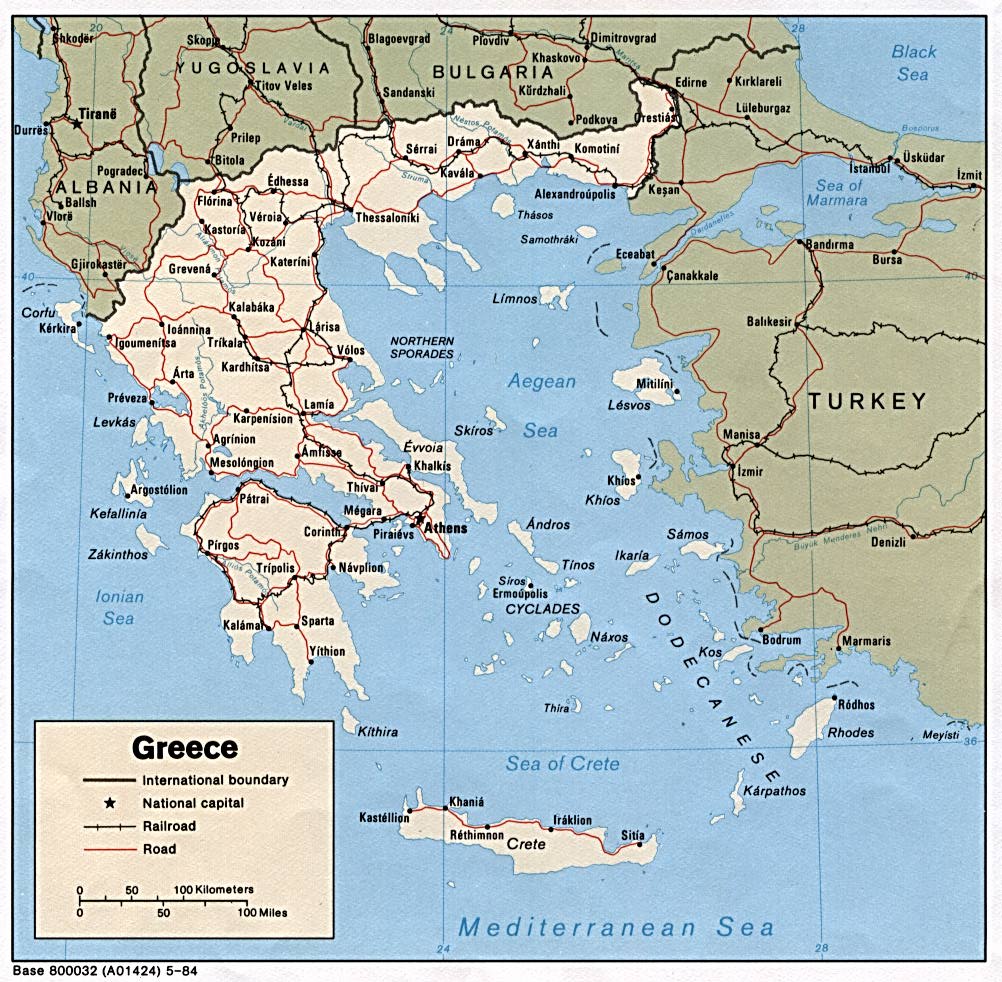
Greece:
<http://www.lib.utexas.edu/maps/europe/greece.jpg> and <http://healthmap.org/promed/p/83>
Greece regions and districts:
<https://defc.acdh.oeaw.ac.at/static/defcdb/greece_map.jpg>
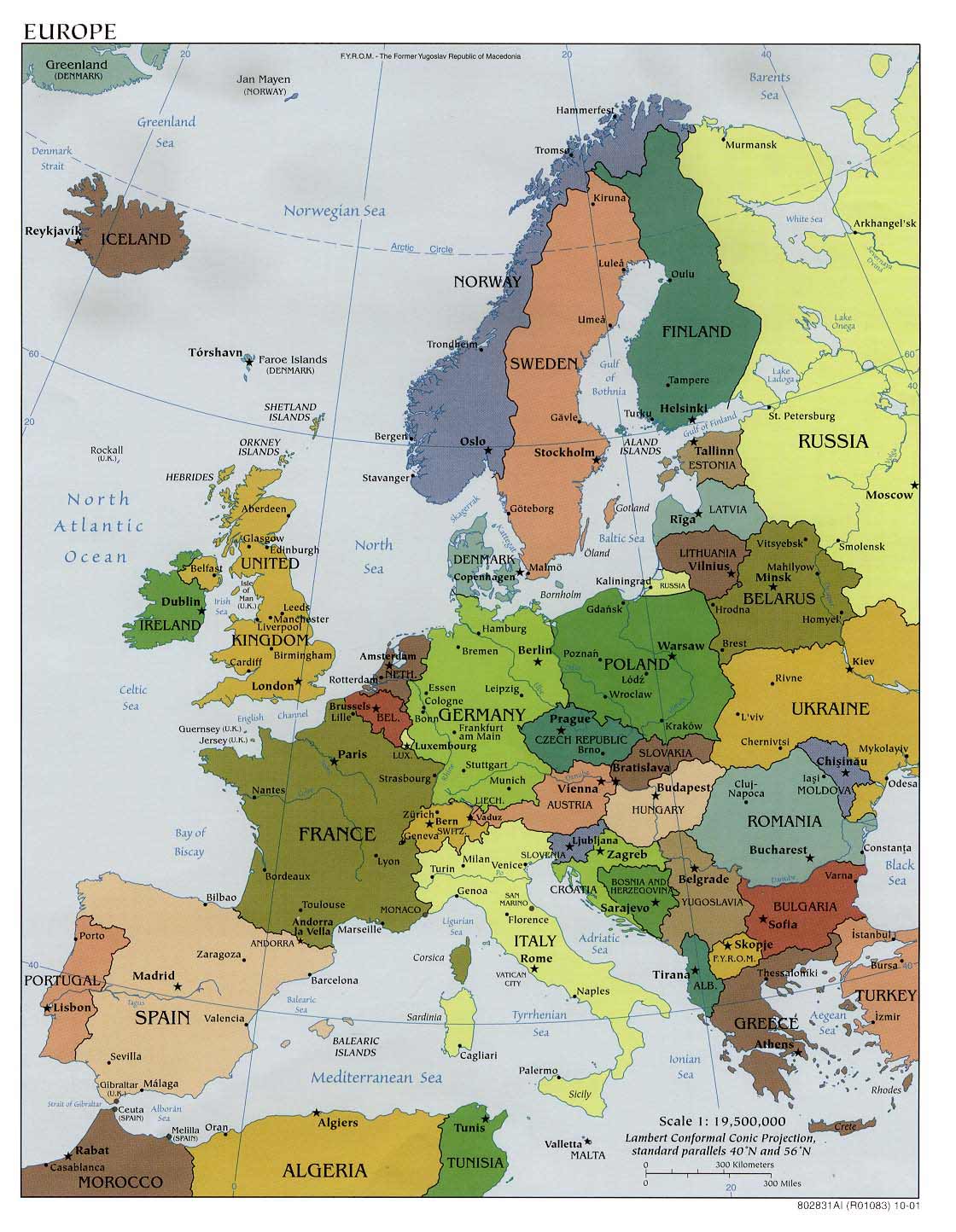
Europe, overview:
<http://www.edinphoto.org.uk/0_MAPS/0_map_europe_political_2001_enlarged.jpg>
Pictures
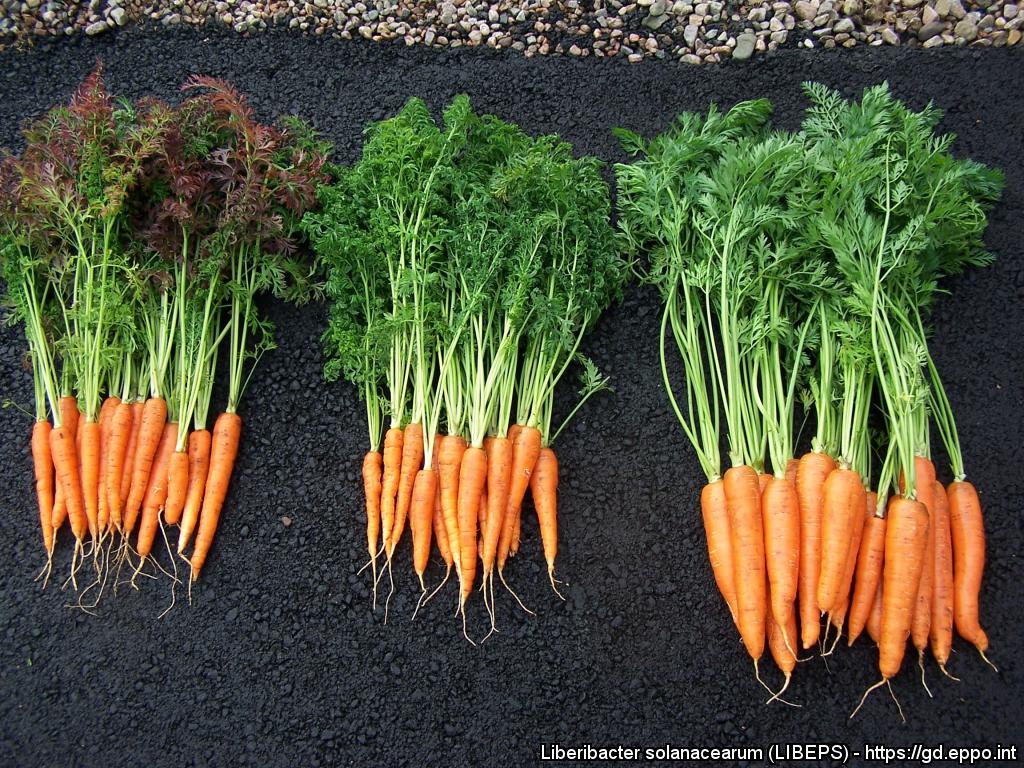
Lso affected carrot (compared with healthy):
<https://gd.eppo.int/media/data/taxon/L/LIBEPS/pics/1024x0/1939.jpg>
Lso symptoms on tomato fruit:
<http://nwdistrict.ifas.ufl.edu/phag/files/2014/10/Fig-7-PY-Dufault.jpg>
Zebra chip of potato:
<http://www.forestryimages.org/images/3072x2048/1490010.jpg> (plant) and <http://www.digitaljournal.com/img/4/2/9/0/i/4/1/7/o/8ab1aa702fece1872973ac17aec85b6f.jpg>
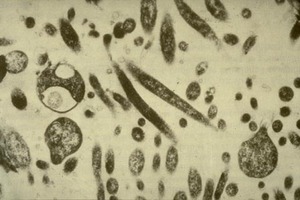
(processed infected tuber, compared with healthy) Lso, microscopy:
<http://bacmap.wishartlab.com/system/images/1223/medium/Candidatus_Liberibacter.jpg?1319706599>
Lso photo gallery:
<https://gd.eppo.int/taxon/LIBEPS/photos>
Links
Information on _Ca._ Liberibacter solanacearum:
<http://www.eppo.int/QUARANTINE/Alert_List/bacteria/Liberibacter_psyllaurous.htm>,
<http://onlinelibrary.wiley.com/doi/10.1111/epp.12043/pdf>,
<http://www.cabi.org/isc/datasheet/109434>,
<http://www.rhizobia.co.nz/downloads/Weir_CS23.pdf>, and via <http://archives.eppo.org/EPPOReporting/2012/Rse-1209.pdf>
Lso haplotypes:
<http://link.springer.com/article/10.1007/s10658-012-0121-3/fulltext.html>
and
<http://www.appsnet.org/publications/Potato_Diseases_Workshop/9.%20Poliakoff_C%20liberabacter%20solanacearum%20in%20carrot%20France.pdf>
Information on Lso psyllid vectors:
<http://www.apsnet.org/publications/plantdisease/2012/April/Pages/96_4_581.3.aspx>,
<http://www.ncbi.nlm.nih.gov/pubmed/20857712>,
<http://onlinelibrary.wiley.com/doi/10.1111/j.1744-7348.2012.00551.x/full>,
and
<http://onlinelibrary.wiley.com/doi/10.1111/aab.12149/abstract>
Information on potato zebra chip disease:
<http://www.digitaljournal.com/article/257488> and <http://link.springer.com/article/10.1007/s10658-010-9702-1/fulltext.html>
_Ca._ L. solanacearum taxonomy:
<http://www.uniprot.org/taxonomy/556287>
Genus _Ca._ Liberibacter taxonomy and species list:
<http://beta.uniprot.org/taxonomy/34019>
EPPO A1 quarantine list:
<http://www.eppo.int/QUARANTINE/listA1.htm>
- Mod.DHA]
[See Also:
Liberibacter solanacearum, potato - Spain: (CB)
http://promedmail.org/post/20170802.5222241
Liberibacter, carrot - Israel: 1st rep
http://promedmail.org/post/20170130.4803773
2016
----
Liberibacter, carrot - Sweden: (HA)
http://promedmail.org/post/20161130.4666613
2015
----
Liberibacter, carrot - Germany: 1st rep (NI)
http://promedmail.org/post/20151009.3702151
Liberibacter, solanaceous crops - Norfolk Island: 1st rep.
http://promedmail.org/post/20150417.3303297
2014
----
Liberibacter, carrot - Africa: 1st rep, Morocco
http://promedmail.org/post/20141121.2978030
2012
----
Liberibacter, vegetable crops - multicountry
http://promedmail.org/post/20120713.1199961
2011
----
Zebra chip, potato - USA, New Zealand: updates
http://promedmail.org/post/20110915.2812
2009
----
Liberibacter, solanaceous crops - multicountry
http://promedmail.org/post/20090515.1819
and older items in the archives]


 Topics
 Species